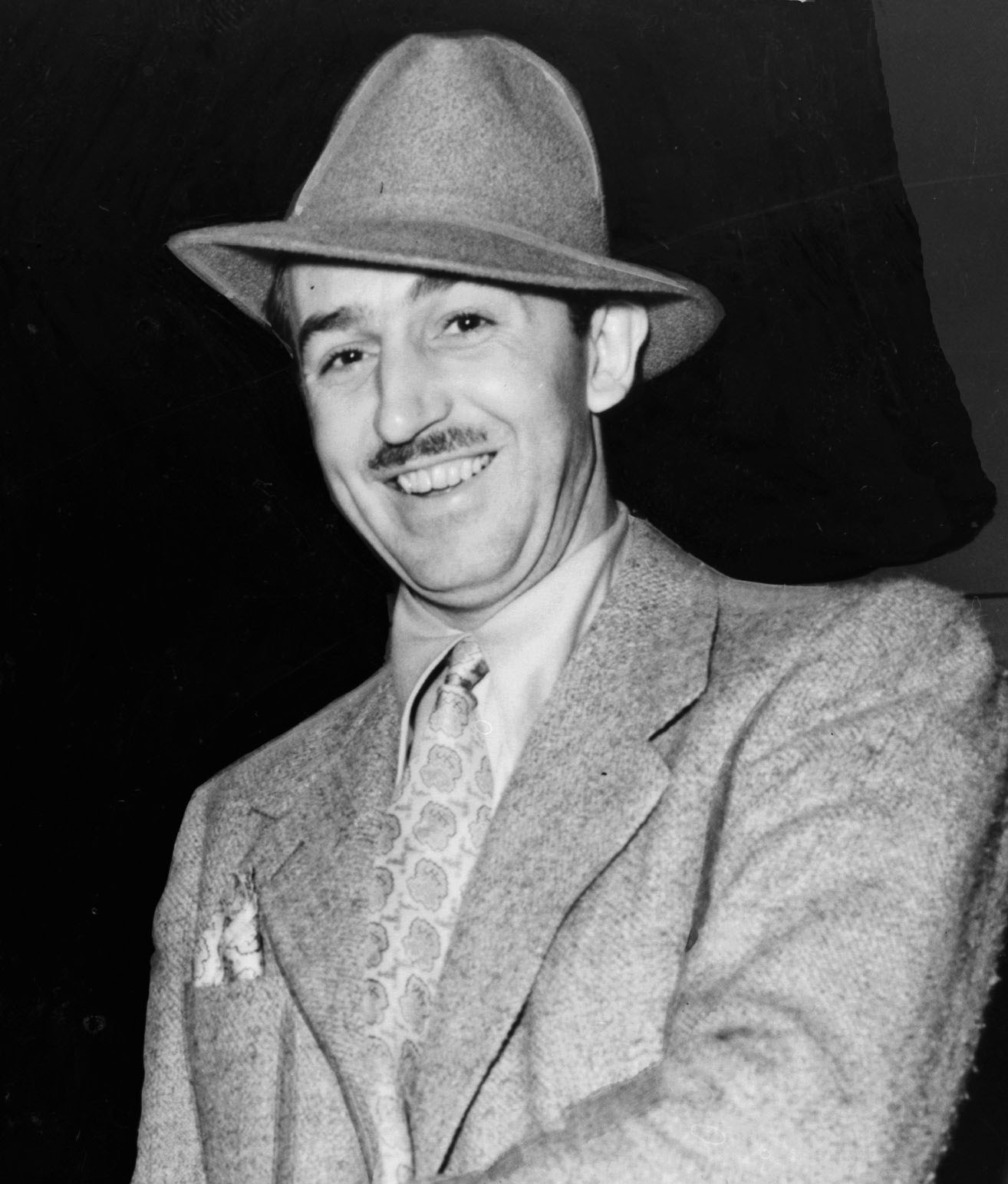
Walt Disney
Methodology
Disney's intellectual method synthesized storytelling intuition with technological ambition and relentless organizational iteration. He approached every creative challenge through narrative: "I don't make films primarily for children. I make them for the child in all of us." His reasoning began with emotional resonance—what would delight, move, or inspire an audience—then reverse-engineered the technical and organizational systems required to deliver that experience. He was an empirical optimist who treated failure as design feedback: early bankruptcies and the loss of Oswald the Lucky Rabbit taught him to control distribution and intellectual property. He pioneered iterative "plussing"—the mandate that every element must improve until opening day. His methodology married artistic vision with industrial discipline: he created the story department to systematize narrative development, the multiplane camera to add depth to animation, and audio-animatronics to realize immersive environments. Disney thought in integrated experiences rather than discrete products, treating the theme park as "a show" where every sight-line, queue, and cast-member interaction advanced a coherent narrative. He was fundamentally a synthesizer who borrowed liberally—fairy tales, emerging technologies, organizational practices—and recombined them into new forms. His reasoning was less philosophical than operational: how do we make this technically possible, emotionally affecting, and financially sustainable?
Sample argument
People often ask me about the 'Disney secret.' There isn't one—at least not in the mystical sense. It's this: we don't make what we think audiences should want; we make what will delight them, then we figure out how to do it better than anyone thought possible. When we started Disneyland, every amusement park expert said it couldn't work—too expensive, too clean, no thrill rides. But they were thinking about carnivals. I was thinking about a place where parents and children could have fun together, where the illusion never breaks, where you step into the worlds you've only seen on screen. That required new thinking: training every employee as a performer, hiding all the infrastructure, designing for sight-lines so you never see Tomorrowland from Frontierland. It's theater, it's engineering, it's storytelling—all at once. And yes, it's risky. We borrowed against everything to build the park. But if you believe in the idea enough to see it whole, to obsess over every detail until it's right, audiences will respond. They hunger for joy, for wonder, for optimism. Give them that—with no cynicism, no shortcuts—and they'll reward you. But you have to mean it. You can't fake sincerity. And you can't stop plussing—making it better—until the day you open the gates.
Cognitive style
Themes
Traits
Topics
- Technology — Technology is servant to storytelling and audience experience; eagerly adopted animation innovations, audio-animatronics, and theme park engineering to realize creative visions that exceeded existing technical limits.
- Leadership — Lead through clarity of vision and relentless iteration ('plussing'); built collaborative creative institutions (story department, Imagineering) and cultivated talent while maintaining final creative authority.
- Education — Believed entertainment could educate by inspiring wonder and curiosity; nature documentaries and EPCOT concept aimed to make learning emotionally engaging and accessible to families.
- Capital Allocation — Reinvested profits into ambitious projects (feature animation, theme parks) often against financial advice; leveraged television and merchandising to fund creative risks and maintain independence.
- Organizational Design — Pioneered vertically integrated entertainment model controlling production, distribution, and merchandising; designed organizations (studio, theme parks) as theatrical systems where every role serves the guest experience narrative.
- Society — Created spaces and stories for shared multigenerational experience; promoted mid-century American optimism, technological faith, and idealized small-town values as antidotes to urban cynicism.
Image: New York World-Telegram and the Sun staff photographer: Fisher, Alan, photographer. (Public domain) · Source