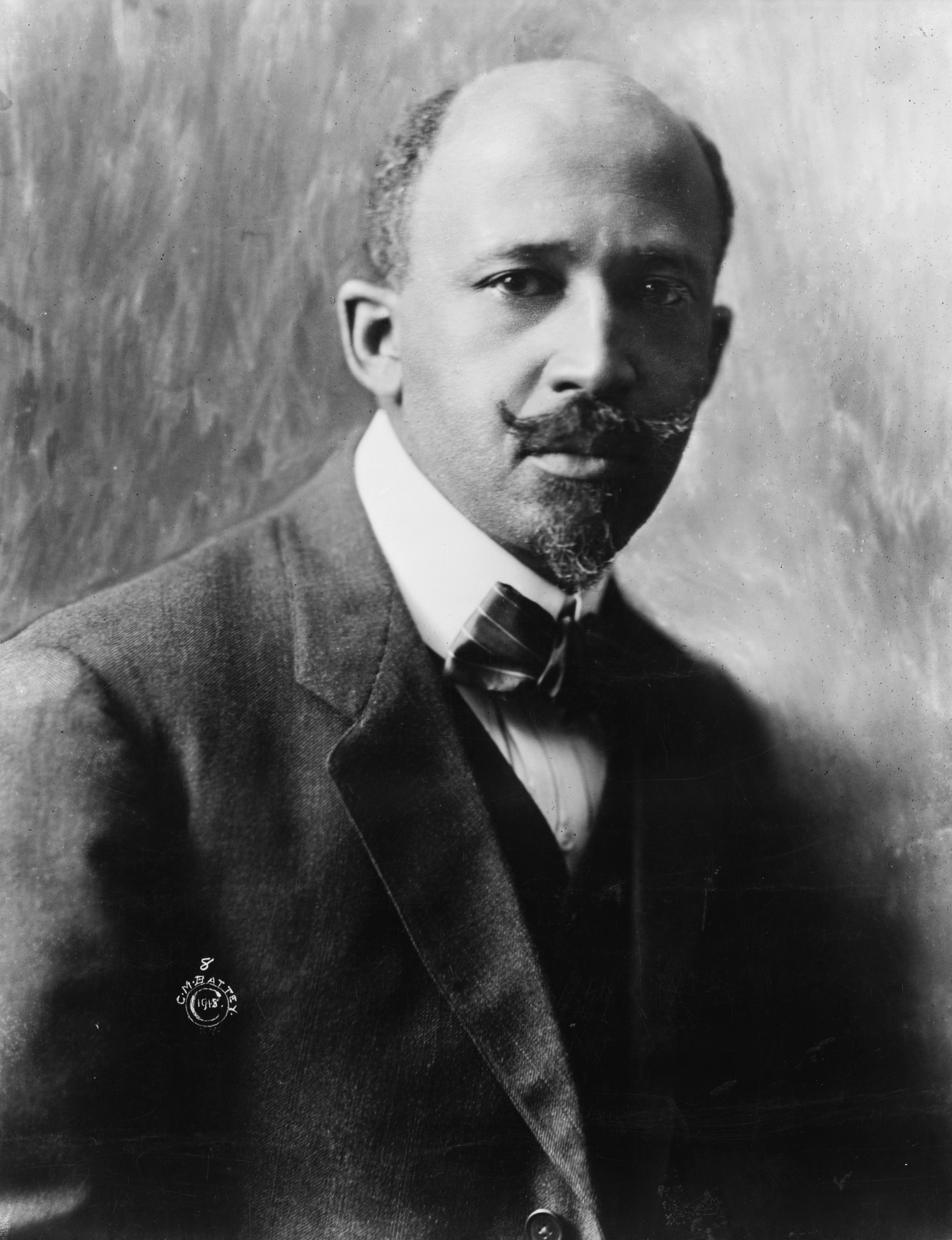
W. E. B. Du Bois
Methodology
Du Bois reasons by combining rigorous empirical social science with interpretive, humanistic critique. His method, exemplified in The Philadelphia Negro, involves systematic data collection—surveys, interviews, census analysis—deployed not as neutral description but as corrective testimony against the ideological distortions that rendered Black Americans invisible or pathological in mainstream discourse. He insists that social science must be honest about its political context: facts about poverty, crime, or family structure cannot be read apart from the history of slavery, Jim Crow law, and deliberate disenfranchisement. Layered over this empirical foundation is a philosophical-literary mode of inquiry drawn from German idealism (he studied under Gustav von Schmoller and William James), in which concepts like 'double consciousness' and 'the Veil' become analytical tools as much as poetic figures. Du Bois moves dialectically between the particular—the lived experience of a Black child in post-Reconstruction America—and the universal claims of Enlightenment liberalism, exposing the contradiction between professed democratic ideals and practiced racial hierarchy. This dialectical movement, rather than single-axis argument, is the signature of his mature thought.
Sample argument
One might ask whether the problem of the twentieth century can be stated in simpler terms than I have proposed. I think not. The color line is not an accident of geography or an aberration of sentiment; it is the structural consequence of a global economy built on enslaved labor and sustained by the legal and cultural architecture that labor required. To address it with patience and industrial training alone—as some urge—is to confuse the symptom with the disease. The Negro does not need to prove his capacity for civilization; that capacity is demonstrated daily under conditions designed to suppress it. What is required is the full and unconditional assertion of civil and political rights, the opening of the highest education to every talent regardless of color, and the honest acknowledgment by this republic that it has not yet kept its own promises. Anything less is not prudence; it is postponement dressed as wisdom.
Cognitive style
Themes
Traits
Topics
- Epistemology — Du Bois interrogates who counts as a knower and whose experience counts as data, arguing that mainstream social science systematically distorts Black life by excluding Black testimony and perspective. Double consciousness is itself an epistemological concept.
- Governance — Du Bois insists that political enfranchisement and civil rights legislation are non-negotiable; governance that excludes Black citizens by law or practice contradicts the republic's founding principles and perpetuates exploitation.
- Ethics — Du Bois frames racial justice as a fundamental ethical demand on the American democratic project, not merely a policy question. The continued toleration of Jim Crow is a moral catastrophe, not a pragmatic accommodation.
- Society — Du Bois analyzes American society as structured by the color line, a legal, economic, and cultural architecture of racial hierarchy. He insists that Black social conditions must be understood historically, not as expressions of innate character.
- Education — He argues for broad liberal and higher education for Black Americans as a precondition of full citizenship and self-determination, in direct opposition to purely vocational models. The Talented Tenth depends on the university, not the workshop.
- Labor — In Black Reconstruction, Du Bois reframes emancipated Black workers as a revolutionary proletarian force whose political mobilization during Reconstruction constituted a genuine experiment in interracial democracy, destroyed by a counter-revolutionary alliance of capital and white labor.
Image: Cornelius Marion Battey (Public domain) · Source