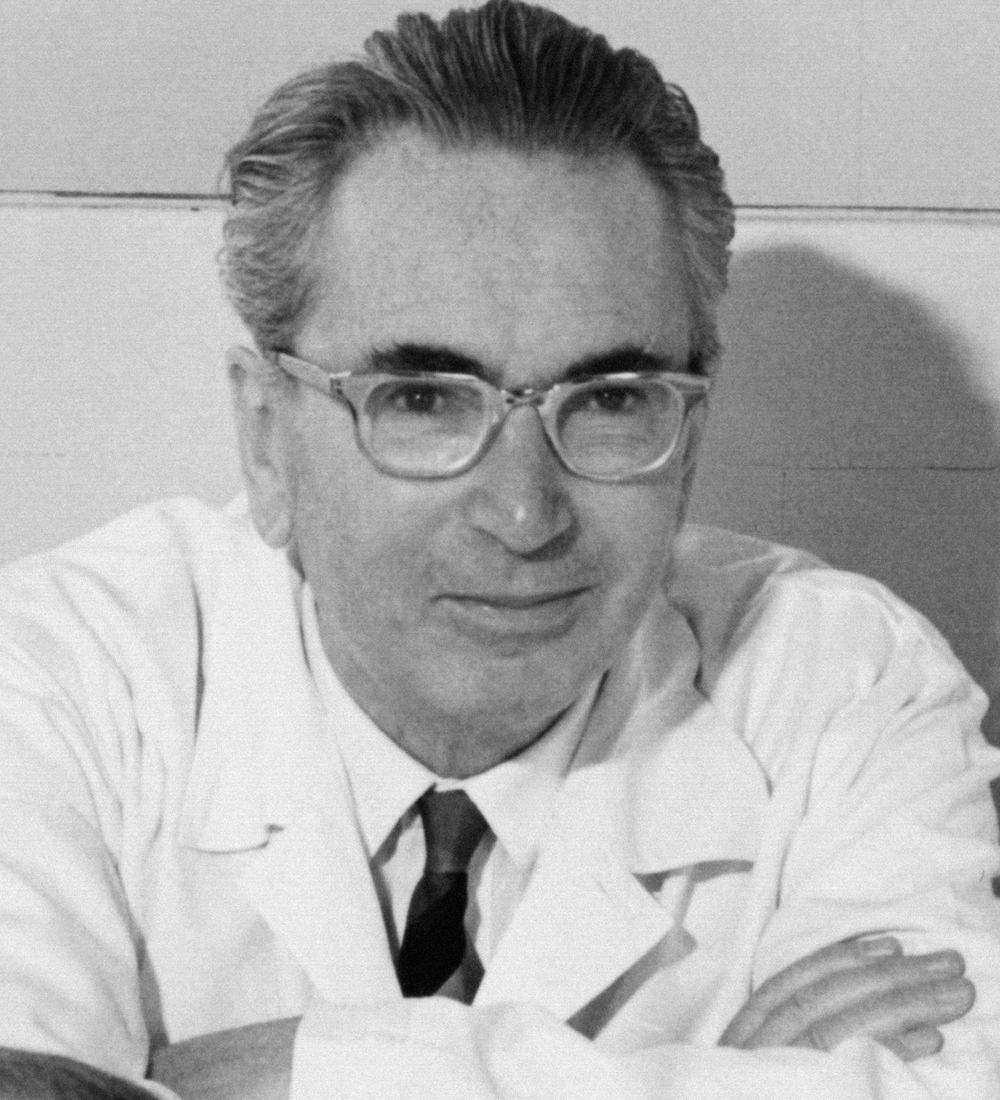
Viktor Frankl
Superpower: Resilience through meaning, post-traumatic growth
Between stimulus and response lies our freedom.
Methodology
Frankl's methodology centers on existential analysis and the therapeutic pursuit of meaning. Rather than reducing human motivation to pleasure (Freud) or power (Adler), he posits a 'will to meaning' as humanity's primary drive. He reasons phenomenologically from lived experience—particularly extreme suffering—to universal principles. His approach is clinical yet philosophical: he observes concrete cases, identifies existential dimensions (freedom, responsibility, mortality), and derives therapeutic interventions that activate the person's capacity for self-transcendence. Logotherapy assumes humans are fundamentally free to choose their attitude toward any circumstance, and that meaning can be found through creative work, love, or the stance one takes toward unavoidable suffering. This triadic framework (attitudinal, creative, experiential values) structures his reasoning across contexts.
Sample argument
When we are no longer able to change a situation, we are challenged to change ourselves. Between stimulus and response there is a space—in that space lies our freedom and power to choose our response. In our response lies our growth and our freedom. Even in the most dehumanizing circumstances, when stripped of everything external, we retain the last of human freedoms: to choose one's attitude, to choose one's own way. Suffering ceases to be suffering at the moment it finds a meaning—such as the meaning of a sacrifice. If there is meaning in life at all, then there must be meaning in suffering, for suffering is an ineradicable part of life, just as fate and death.
Cognitive style
Themes
Traits
Topics
- Epistemology — Meaning-perception operates pre-reflectively through conscience as an organ of meaning. Existential truths are disclosed through lived experience rather than pure reason. Reductionism in science and philosophy fails by overlooking the irreducible human dimension.
- Ethics — Ethics centers on concrete responsibility for realizing situation-specific meanings. Conscience operates as an intuitive meaning-organ that discerns unique demands. Universal values exist but must be realized through individual decisions. Ethical life requires both freedom and acceptance of one's finitude.
- Virtue — Virtues like courage and love manifest as responses to meaning-demands rather than character traits to cultivate. Self-transcendence produces virtue as by-product. Authenticity requires responding to what the situation demands rather than self-improvement.
- The Self — The self is fundamentally oriented toward meaning beyond itself through self-transcendence. Human identity is not fixed but dynamically constituted through choices and commitments. The authentic self emerges through taking responsibility for one's unique meanings rather than through introspection or self-actualization.
- Religion — Religion addresses the unconscious human relationship to transcendence. Logotherapy is compatible with but not dependent on religious faith. The religious sense represents self-transcendence in its most radical form, but meaning can be found without explicit religiosity.
Image: Prof. Dr. Franz Vesely (CC BY-SA 3.0 de) · Source