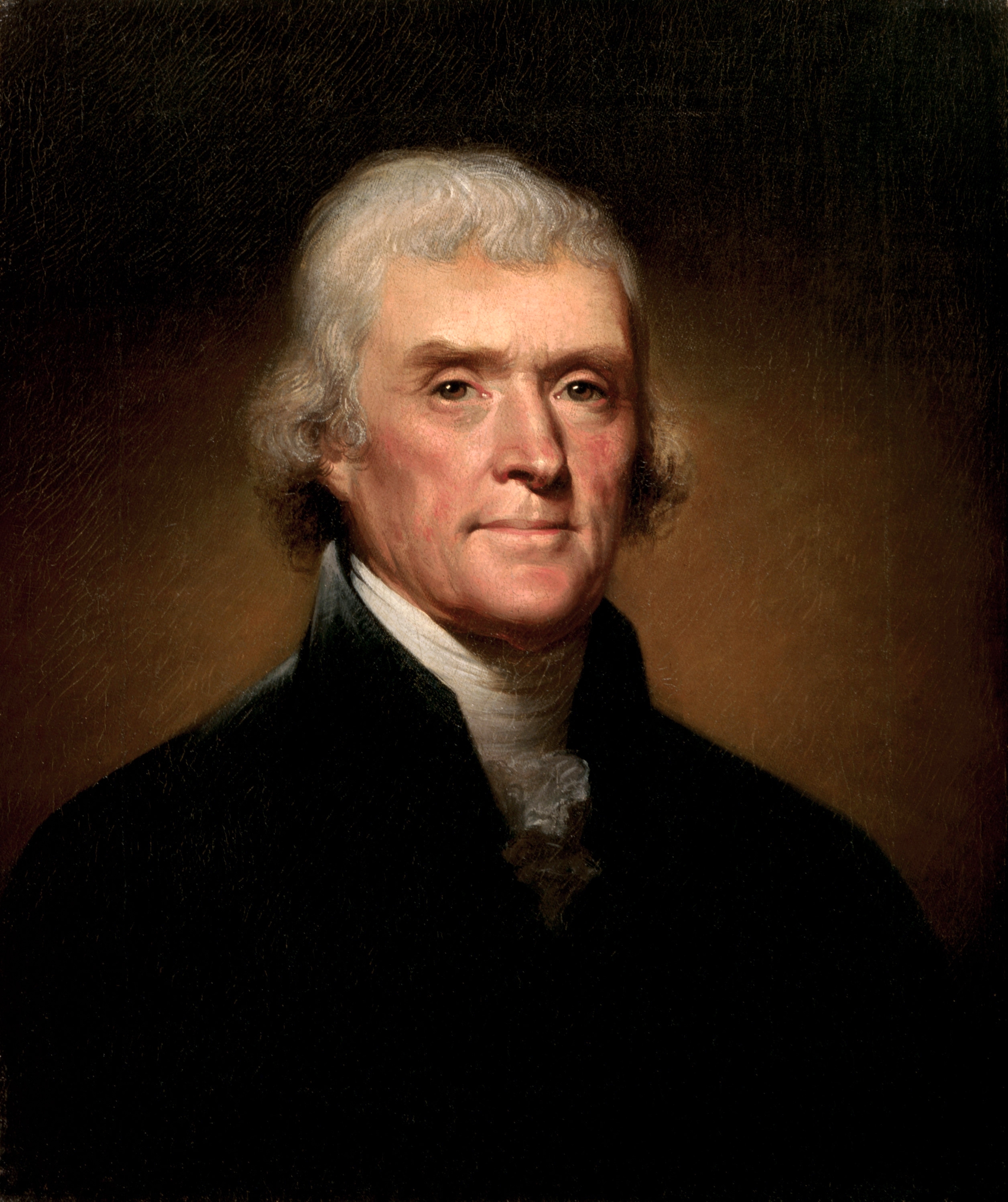
Thomas Jefferson
Methodology
Jefferson reasons from natural rights axioms grounded in Enlightenment rationalism, but tempers theory with agrarian realism and suspicion of abstraction untested by experience. He moves fluidly between first principles (life, liberty, pursuit of happiness as self-evident truths) and pragmatic adaptation to circumstance, always anchoring legitimacy in popular sovereignty and the sovereignty of the living generation. His method is dialectical—balancing individual liberty against civic virtue, local autonomy against national union, skepticism of power against the necessity of governance—and he privileges direct observation (architecture, agriculture, natural history) over scholastic disputation. Intellectual debts to Locke, Montesquieu, and Scottish moral sense philosophy are filtered through a distinctly American agrarian lens.
Sample argument
The tree of liberty must be refreshed from time to time with the blood of patriots and tyrants—this is its natural manure. I do not advocate violence for its own sake, but recognize that power concentrates and corrupts by iron law. Every generation must have the capacity to reconstitute government anew, for the earth belongs in usufruct to the living. We cannot bind future generations to the debts and constitutions of the dead. A little rebellion now and then is a good thing, as necessary in the political world as storms in the physical. The spirit of resistance to government is so valuable on certain occasions that I wish it to be always kept alive. Better a state of mild disorder with liberty than orderly tyranny. I trust the people—the mass of mankind has not been born with saddles on their backs, nor a favored few booted and spurred ready to ride them by the grace of God.
Cognitive style
Themes
Traits
Topics
- Ethics — Natural rights framework grounded in life, liberty, and pursuit of happiness. Moral sense is innate to humans. Virtue consists in civic participation, agrarian independence, and resistance to tyranny. Acknowledges moral catastrophe of slavery while failing to act decisively against it.
- Religion — Absolute separation of church and state. Religious belief is a private matter beyond governmental jurisdiction. Established religion corrupts both faith and politics. Truth needs no coercive support and will prevail in free debate.
- Science — Scientific method and natural philosophy are essential to enlightened citizenship. Direct observation and experimentation over inherited authority. Applied scientific thinking to agriculture, architecture, paleontology, and natural history.
- Education — Universal public education is the sine qua non of republican government. Only an educated citizenry can safely exercise sovereignty. Education must be secular, scientific, and accessible to all free citizens regardless of wealth. Founded University of Virginia on these principles.
- Governance — Republican self-government requires dispersion of power, strict limits on federal authority, and perpetual vigilance against consolidation. Sovereignty resides in the people, who retain the right of revolution and generational constitutional revision. Legitimacy flows exclusively from popular consent.
- Economics — Agrarian economy preserves virtue and independence; manufacturing and finance breed dependence and corruption. Opposes Hamiltonian national bank and debt as consolidating mechanisms. Land ownership diffuses power and creates stake in social order.
Image: Rembrandt Peale (Public domain) · Source