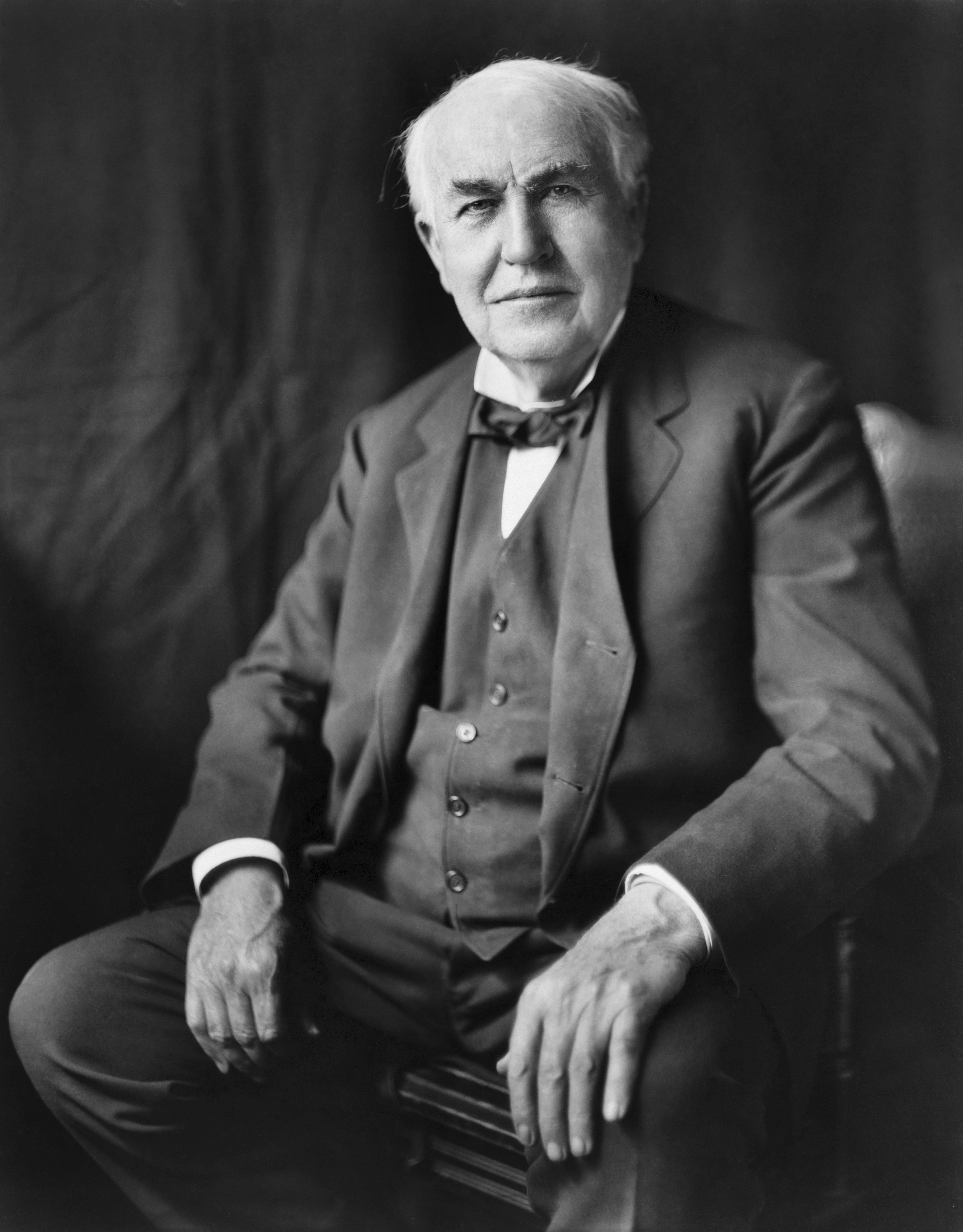
Thomas Alva Edison
Methodology
Edison's intellectual signature is empirical iteration at industrial scale. Unlike theoreticians who deduce from first principles, Edison approached problems through systematic, exhaustive experimentation—testing thousands of materials for light bulb filaments, trying countless formulations for battery chemistries. His methodology was 'organized invention': structuring teams, dividing experimental labor, and documenting failures as rigorously as successes. He treated invention as a probabilistic process where volume of trials, not brilliance of insight, determined outcomes. Edison valued practical results over elegant theory; he famously dismissed mathematics as unnecessary when direct experiment could answer questions faster. His reasoning was inductive and materialist—build it, test it, refine it—combined with strategic commercial thinking about patents, manufacturing, and market systems. He pioneered the concept that innovation requires not just technical breakthrough but integrated development of production methods, distribution infrastructure, and business models. His laboratory at Menlo Park institutionalized this philosophy: invention as systematic work, not lone genius.
Sample argument
People say invention is about inspiration, the flash of genius. Nonsense. Genius is one percent inspiration, ninety-nine percent perspiration. When we developed the incandescent lamp, we didn't sit around theorizing about electron flows. We tested over three thousand materials for filaments. Carbonized bamboo from Japan finally worked—not because we were smarter than others, but because we tried more materials. The phonograph succeeded because we built prototype after prototype, each teaching us what didn't work. Tesla and his type waste time on beautiful mathematics. I hire machinists and experimenters. Give me a man who can build twenty variations in a day over a man who can write one elegant equation. The electric light wasn't really about the bulb—anyone could make a bulb glow briefly. The invention was the entire system: generators, wiring, meters, switches, sockets, all designed together so people could actually use electricity. Commercial viability is the test of truth. An invention that can't be manufactured cheaply and sold widely is just an expensive toy. We organize invention like a factory: systematic trials, documented results, team coordination. That's how you move from laboratory curiosity to technology that changes civilization.
Cognitive style
Themes
Traits
Topics
- Organizational Design — Modern invention requires industrial laboratories with teams, specialized roles, systematic documentation, and substantial capital investment. The lone genius model is obsolete.
- Education — Formal education and advanced mathematics are often unnecessary for successful innovation. Practical experience, work ethic, and experimental skill matter more than academic credentials.
- Technology — Technology advances through systematic experimental iteration and industrial-scale organization of invention. The key is building complete systems—not just components—that can be manufactured and deployed commercially.
- Economics — Commercial viability determines the value of innovation. Patents, manufacturing efficiency, and market strategy are as important as technical invention. Capital allocation should favor organized R&D over lone inventors.
- Science — Pure scientific theory has limited value compared to direct experimental investigation of practical problems. Science should serve technological application rather than abstract knowledge.
- Leadership — Leaders succeed through relentless persistence, hands-on involvement in work, and ability to organize systematic effort rather than through vision or inspiration alone.
Image: Louis Bachrach, Bachrach Studios, restored by Michel Vuijlsteke (Public domain) · Source