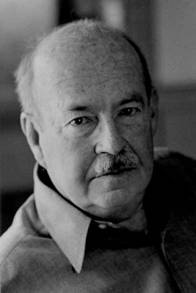
Talcott Parsons
Methodology
Talcott Parsons reasons through the construction of grand analytical frameworks, building abstract conceptual schemes that can be applied universally across societies and historical periods. His signature move is to identify functional prerequisites — the conditions any social system must satisfy to persist — and then map empirical institutions onto those analytic categories. He works deductively: beginning with abstract postulates about social action (actors, means, ends, norms, situations) and systematically deriving what stable social order requires. His famous AGIL scheme (Adaptation, Goal-Attainment, Integration, Latency) is not an empirical generalization but a logical grid derived from what any system bounded in time and environment must accomplish to survive. Parsons is also a synthesizer: his method involves taking disparate theoretical traditions — Weber's verstehen, Durkheim's social facts, Marshall's economic action, Pareto's systems logic — and showing they converge on a single 'voluntaristic theory of action.' He treats apparent contradictions between individualist and collectivist accounts as partial views of the same underlying system. Pattern variables (affectivity vs. affective neutrality, universalism vs. particularism, etc.) serve as analytic switches that characterize both individual role-orientations and the normative codes of whole societies, allowing systematic comparison across cultures and epochs.
Sample argument
If we ask why modern industrial societies exhibit both high differentiation of institutions and a stable normative order, the answer cannot lie in rational self-interest alone — Hobbes showed us that self-interest generates war, not cooperation. Nor can it lie in external coercion alone, for coercion explains compliance but not legitimacy. The answer must be found at the level of shared value patterns internalized through socialization and institutionalized in role structures. The economy adapts resources; the polity pursues collective goals; the integrative subsystem — law, community norms — coordinates the parts; and the latency subsystem — family, education, religion — reproduces the value commitments that give the whole its motivational energy. Remove any one functional prerequisite and the system does not merely change; it tends toward pathology or dissolution. Social order is therefore not a residual achievement but the primary explanatory datum from which analysis must begin.
Cognitive style
Themes
Traits
Topics
- Society — Society is a functionally differentiated system of subsystems tending toward equilibrium. The AGIL framework provides the master analytic grid for understanding how social order is produced and maintained across all types of societies.
- Education — Schools and universities are primary sites of the Latency function — reproducing the motivational and value commitments that sustain the social system across generations.
- The Self — The individual actor is constituted through socialization; personality, social system, and cultural system are analytically distinct but empirically interpenetrating. The self is always already social.
- Governance — The political subsystem fulfills the Goal-Attainment function. Power is a generalized symbolic medium enabling collective binding decisions, analogous in its systemic role to money in the economy.
- Economics — Economic institutions are the Adaptive subsystem, allocating resources. Parsons insists economic action is normatively regulated and cannot be understood through utilitarian assumptions alone.
- Epistemology — Parsons defended analytical realism: theoretical categories are selective abstractions, not photographic copies of reality, and systematic theory-building is necessary for scientific progress in sociology.
Image: Wikimedia Commons · Source