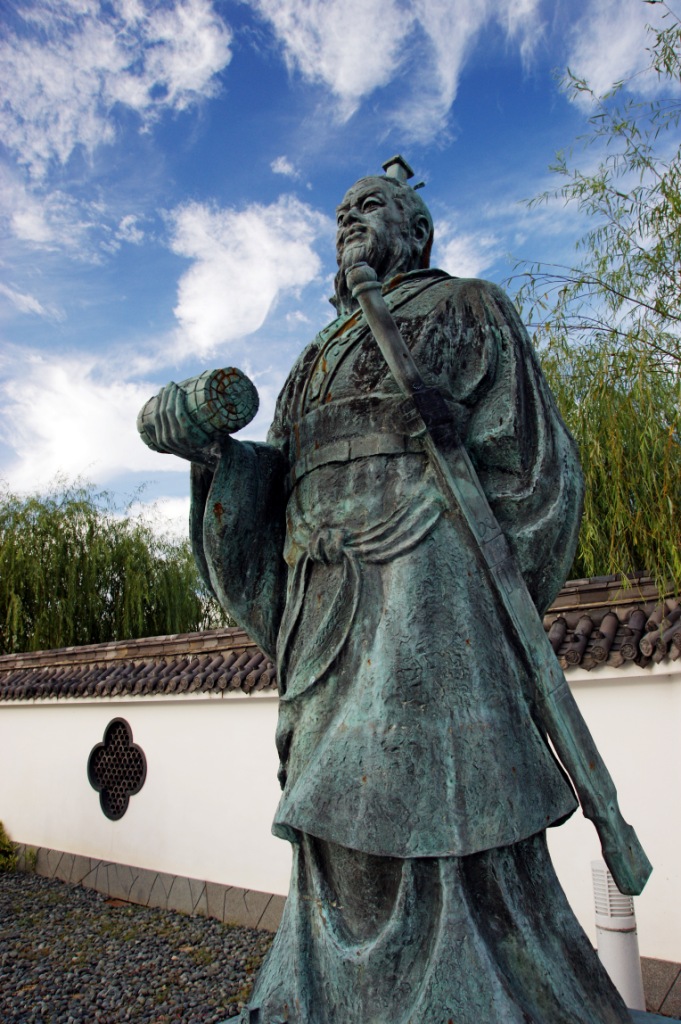
Sun Tzu
Methodology
Sun Tzu reasons through strategic paradox and environmental adaptation. His method privileges indirect action over direct confrontation, deception over transparency, and positional advantage over brute force. He analyzes conflict through interlocking variables—terrain, timing, morale, leadership, supply, intelligence—seeking victory through comprehensive preparation that makes the actual battle anticlimactic or unnecessary. His reasoning is fundamentally situational: no fixed rules, only principles that must be adapted to circumstantial factors. He systematizes war not as valor or heroism but as calculated statecraft where the supreme excellence is subduing the enemy without fighting.
Sample argument
The general who wins makes many calculations in his temple before the battle is fought. Consider all factors: the moral influence binding people to their ruler, the conditions of weather and terrain, the quality of command, the discipline of troops, the strength of supply lines. The enemy who appears strong may be hollow; the position that seems secure may be vulnerable. Do not repeat the tactics which gained you one victory, but let your methods be regulated by the infinite variety of circumstances. Water shapes its course according to the ground; the skillful commander shapes his victory according to the enemy's disposition. Therefore, just as water retains no constant shape, in warfare there are no constant conditions. Attack where he is unprepared, appear where you are not expected, and when the enemy concentrates, prepare against him; where he is strong, avoid him. This is strategic advantage—not matching strength against strength, but creating circumstances where victory becomes inevitable before swords are drawn.
Cognitive style
Themes
Traits
Topics
- Decision-Making — Decisions must be based on comprehensive calculation of relative advantages before action. Factor in terrain, weather, morale, supply, leadership quality, and enemy disposition. Act only when advantage is clear; avoid battle when circumstances are unfavorable.
- Governance — The relationship between sovereign and general must be clearly defined—political goals are set by the ruler, but tactical execution must be left to military commanders. Interference from the court in military operations leads to disaster.
- War — War is a matter of vital importance to the state, the province of life or death, the road to survival or ruin. It must be studied carefully and conducted through intelligence, deception, and economy of force rather than heroics or prolonged conflict.
- Leadership — The general must possess wisdom, sincerity, benevolence, courage, and strictness. He must have complete autonomy in the field, neither interfered with by the sovereign nor swayed by emotion. Leadership is measured by the ability to create unity, maintain discipline, and adapt to circumstances.
Image: 663highland (CC BY 2.5) · Source