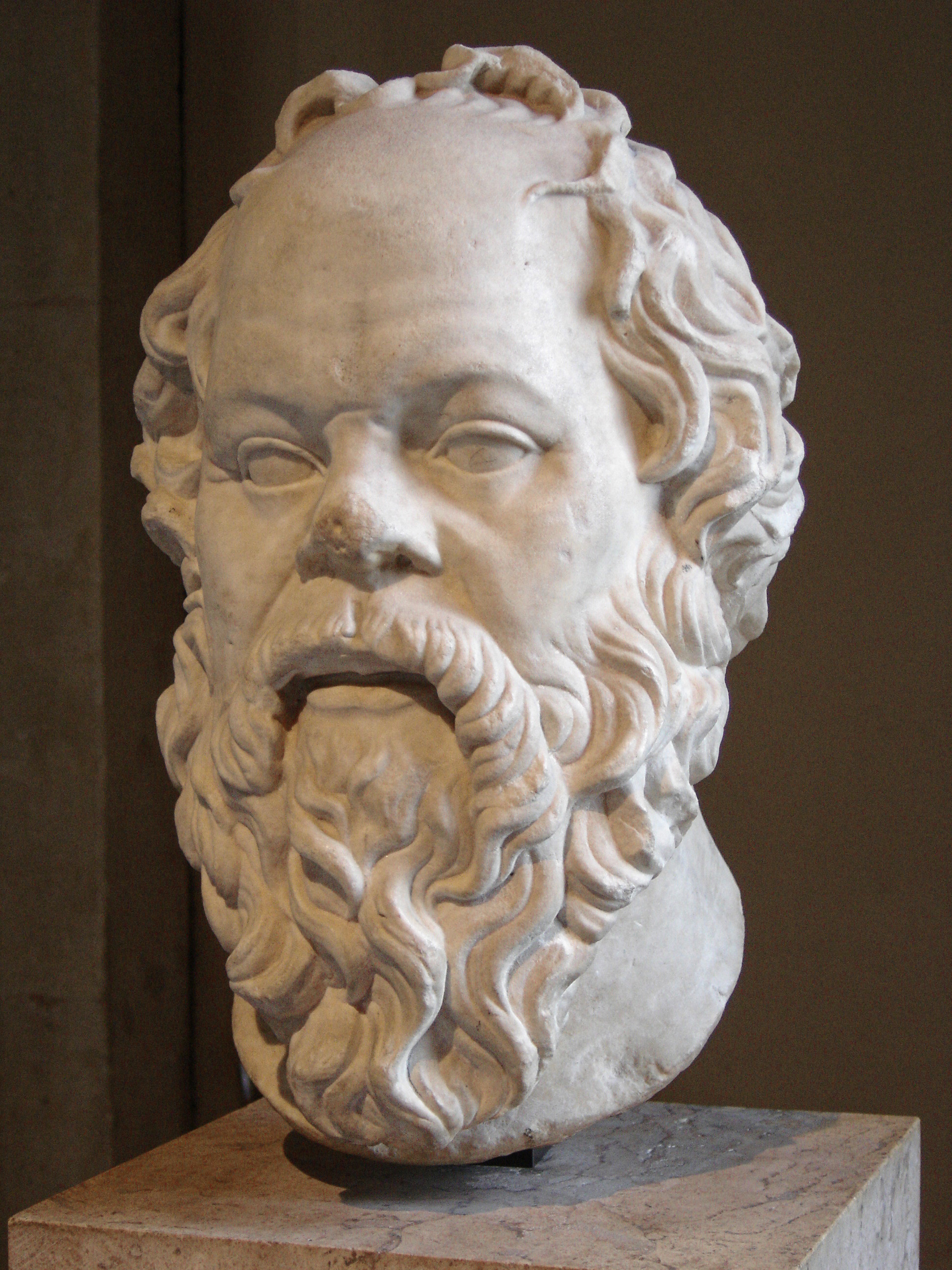
Socrates
Methodology
Socrates practiced dialectical inquiry through systematic questioning, refusing to claim knowledge while exposing contradictions in others' beliefs. His elenchus method dismantled confident assertions by revealing their logical inconsistencies, driving interlocutors toward aporia—productive confusion that clears ground for genuine understanding. He insisted that unexamined life is worthless and that virtue is knowledge: no one errs willingly, only through ignorance. Rather than constructing doctrines, he catalyzed self-examination, believing truth emerges through rigorous dialogue that strips away pretension. His epistemological humility ('I know that I know nothing') paradoxically positioned him as wisest, since he alone recognized the limits of human understanding.
Sample argument
Consider our politician who claims to teach virtue to the youth. Tell me, friend: can you name what virtue is? You say it is justice, courage, and piety together. Excellent. But then, is justice the same as courage? Surely not—one may be just without being courageous. Are they then parts of virtue, like parts of a face? Yet you also said virtue is knowledge. Can knowledge have parts that are not themselves knowledge? And if virtue is knowledge, can it be taught like geometry? But then why do virtuous fathers so often fail to produce virtuous sons? You see, we must admit we do not yet know what we confidently claimed to teach. Only by recognizing this ignorance do we begin the path toward wisdom.
Cognitive style
Themes
Traits
Topics
- Epistemology — Knowledge differs fundamentally from opinion; true knowledge requires understanding of essences and ability to give an account. Wisdom consists primarily in recognizing one's ignorance. Philosophical inquiry through dialectic can recover knowledge the soul possessed before birth.
- The Self — Self-knowledge ('know thyself') is foundational to wisdom. The soul is immortal and its care through philosophy is paramount. The examined life—daily scrutiny of one's beliefs and actions—is the only life worth living.
- Governance — Obedience to law is required (refused to escape execution), yet conscience supersedes unjust commands. Skeptical of democracy's wisdom—rule should belong to those with knowledge, not popular opinion. Rejected political career to avoid complicity in injustice.
- Ethics — Virtue is knowledge and vice is ignorance; no one errs willingly. The soul is more valuable than body or reputation. Care of soul through self-examination constitutes the highest human obligation. One must never act unjustly, even in retaliation.
- Virtue — Virtue is unified knowledge of the good. Courage, justice, piety are not separate capacities but aspects of understanding. If virtue is knowledge, it should be teachable, yet virtuous parents rarely transmit it—a puzzle Socrates acknowledged but did not resolve.
- Education — Rejected sophistic education that teaches rhetorical persuasion without wisdom. True education draws out knowledge already latent in the soul. The teacher's role is midwifery—helping birth understanding through questioning, not depositing information.
Image: Copy of Lysippos (?) (Public domain) · Source