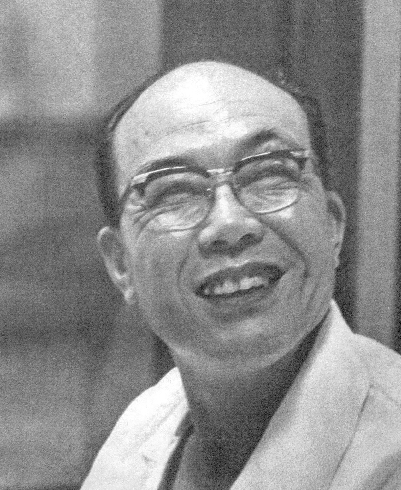
Soichiro Honda
Methodology
Soichiro Honda reasoned from the workbench outward. His intellectual signature was radical empiricism grounded in physical making: he believed that truth about machines — and by extension, about business — could only be discovered by building, breaking, and rebuilding prototypes with one's own hands. He famously distrusted reports and secondhand data, insisting that engineers go to the actual site of a problem (genchi genbutsu avant la lettre) and that no failure was wasted so long as it was analyzed honestly. His aphorism 'success is 99% failure' was not motivational rhetoric but a genuine epistemology: each breakdown was a data point that narrowed the solution space. Honda's second methodological commitment was using competition — especially motorsport — as an accelerated laboratory. Racing imposed unforgiving feedback loops: either the machine performed under extreme conditions or it did not. This compressed the learning cycles that would take years in ordinary production development into a single race season. He applied the same logic institutionally, deliberately hiring engineers who disagreed with him and creating an internal culture where a junior technician's contradicting evidence outranked a senior manager's opinion if it was backed by a working prototype.
Sample argument
If you ask me why Honda entered Formula One, the honest answer is that we needed problems we could not solve in a normal factory. A road engine hides its weaknesses behind comfort margins — oil a little dirty, mixture a little rich, it still runs. A racing engine has no mercy. It shows you every mistake immediately and completely. So racing is not vanity. Racing is the most honest teacher an engineer can have. We lost many races. Each loss taught us something the winning could never have taught. That is the method: go to the place where failure is expensive and unavoidable, and learn there. Bring what you learn back to the people who ride our motorcycles to work every morning.
Cognitive style
Themes
Traits
Topics
- Science — Honda treated engineering knowledge as scientific knowledge won through experiment. He believed that physical testing superseded theoretical calculation whenever the two conflicted, and built Honda's R&D culture on that conviction.
- Organizational Design — Honda co-designed (with Takeo Fujisawa) a flat, engineering-centric corporate structure that deliberately separated technical and commercial authority, allowing each domain its own integrity while keeping them in productive tension.
- Decision-Making — Honda's decision framework was prototype-first: no major product or process decision was final until a working physical model had been built and tested under real conditions. Intuition and rank were explicitly subordinated to empirical result.
- Leadership — He modeled a hands-on, curiosity-led style of leadership in which the founder's continued technical engagement was meant to signal to every employee that craft knowledge held higher status than administrative power.
- Education — Honda was largely self-educated as an engineer and argued throughout his life that formal credentials were poor proxies for real mechanical understanding; he valued apprenticeship and iterative doing over classroom instruction.
- Economics — Honda's economic thinking was instrumental — he cared about financial independence primarily as a precondition for engineering freedom, not as an end in itself, and was skeptical of financial metrics that obscured product quality signals.
Image: 財界研究社、撮影者不明 (Public domain) · Source