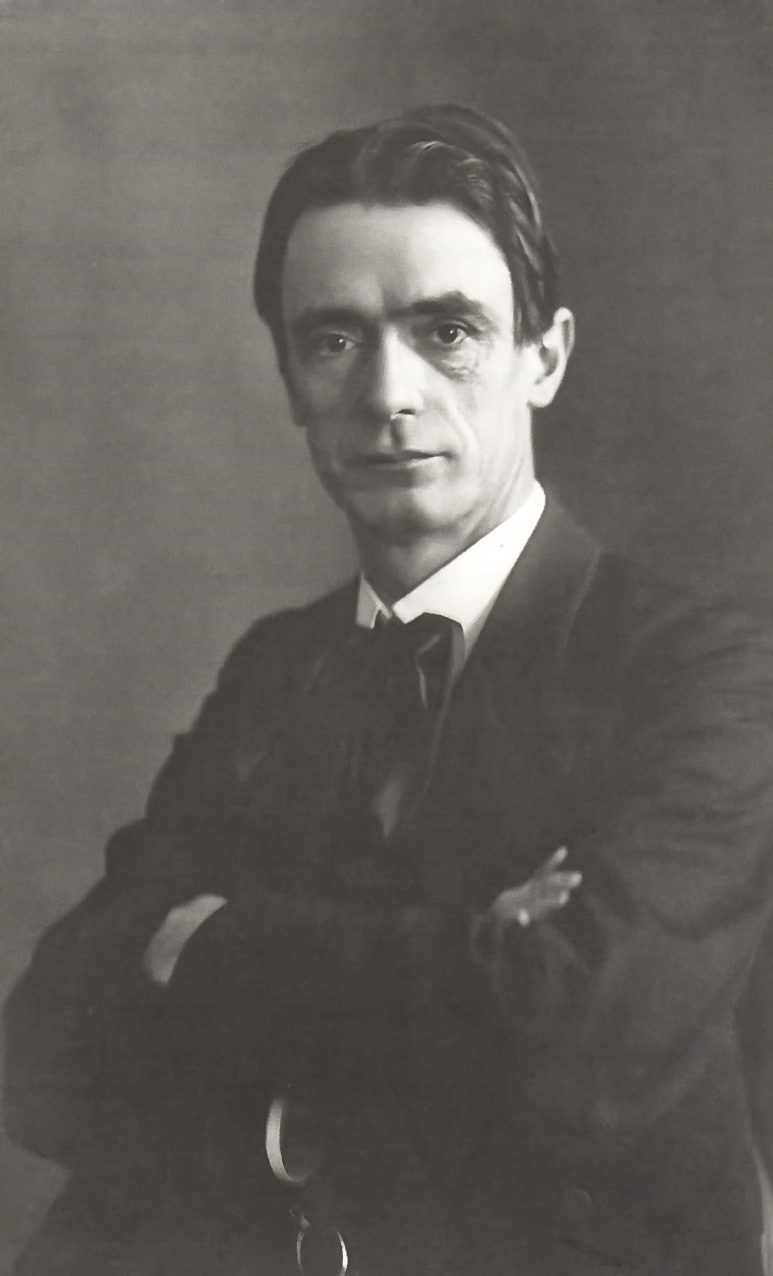
Rudolf Steiner
Methodology
Steiner's methodology rests on what he termed 'spiritual science' (Geisteswissenschaft)—a systematic investigation of supersensible realities through trained clairvoyant faculties. He claimed rigorous phenomenological observation could be extended beyond the physical senses through disciplined inner development, producing verifiable insights into spiritual worlds, karma, and reincarnation. Drawing heavily from Goethe's observational approach to nature, he argued that thinking itself is a spiritual organ capable of perceiving formative forces and archetypal patterns underlying material phenomena. His reasoning proceeded through imaginative-inspirational-intuitive stages: concrete sense-free imagery, then communion with spiritual beings, finally union with cosmic processes. Steiner presented this as empirical in character—repeatable by trained observers—though the verification mechanism remained subjective consciousness rather than intersubjective material testing. His arguments typically moved from philosophical idealism through esoteric Christianity to practical applications, connecting metaphysical principles to education, agriculture, medicine, and social organization through elaborate correspondence theories between macrocosm and microcosm.
Sample argument
Consider the question of child development in education. The materialist views the child as a biological organism shaped by heredity and environment, but this misses the essential reality: the incarnating individuality working downward through threefold soul capacities into the physical body. In the first seven years, the etheric body dominates—imitation and habit formation prevail as invisible growth forces shape the physical organism. Premature intellectual training diverts these formative energies from their proper work of bodily development. Between seven and fourteen, the astral body begins its work through feeling and artistic imagination—this is when reverence, beauty, and narrative nourish the soul's unfolding. Only at puberty does the ego organization fully engage thinking capacities suited to abstract reasoning. An education honoring these spiritual realities cultivates the whole human being rather than training mere intellects. This is not arbitrary pedagogy but recognition of lawful spiritual processes observable through developed supersensible perception, processes that shape human biography across incarnations.
Cognitive style
Themes
Traits
Topics
- Education — Child development follows lawful seven-year phases as spiritual bodies incarnate; education must nurture imagination, reverence, and will before engaging abstract intellect, respecting the incarnating individuality's biography.
- The Self — Human selfhood emerges through ego organization working into physical, etheric, and astral bodies across incarnations; biographical development reflects karmic patterns and spiritual intentions spanning multiple lives.
- Governance — Society requires threefold organization separating cultural-spiritual autonomy, democratic rights equality, and associative economic fraternity—mechanistic unity violates each sphere's intrinsic lawfulness.
- Epistemology — Knowledge acquisition extends beyond sense perception through trained supersensible cognition; spiritual science applies rigorous phenomenological observation to non-physical realities accessible through developed clairvoyance.
- Religion — Christianity represents a cosmic evolutionary turning point through Christ's unique deed; esoteric Christianity reveals spiritual processes underlying exoteric religious forms, accessible through initiation knowledge.
Image: Otto Rietmann (Public domain) · Source