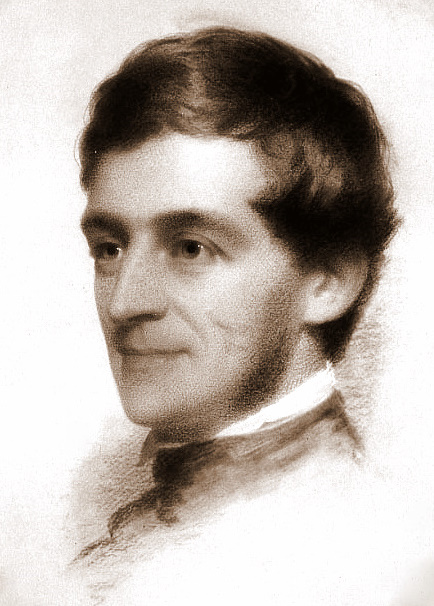
Ralph Waldo Emerson
Methodology
Emerson reasons through intuitive apprehension of universal truths accessible to the individual soul. He rejects systematic philosophy in favor of insight-driven essays that circle subjects from multiple angles, trusting direct perception over inherited doctrine. His method is to synthesize Platonic idealism, Kantian transcendentalism, and Eastern philosophy into a vision where nature reveals spiritual law, where each person contains divine potential, and where conformity to institutions deadens the authentic self. He prioritizes personal experience and the revelatory moment over logical argument, writing to awaken rather than prove. His characteristic move is to ground moral and metaphysical claims in observations of nature, then leap to universal principles about human dignity and self-trust.
Sample argument
On the question of how one should act in the face of social pressure: Trust thyself—every heart vibrates to that iron string. Society everywhere conspires against the manhood of every one of its members. The virtue most requested is conformity, and self-reliance its aversion. Whoso would be a man must be a nonconformist. Nothing is at last sacred but the integrity of your own mind. What I must do is all that concerns me, not what the people think. It is easy in the world to live after the world's opinion; it is easy in solitude to live after our own; but the great man is he who in the midst of the crowd keeps with perfect sweetness the independence of solitude.
Cognitive style
Themes
Traits
Topics
- Epistemology — Knowledge comes through intuitive perception and direct spiritual insight rather than empirical observation or logical demonstration. The soul can apprehend truth directly. Reason in the Kantian sense reveals what experience cannot.
- Religion — Divinity is immanent in nature and the individual soul rather than transcendent and institutional. Traditional religious forms and clergy are unnecessary mediators. Each person has direct access to the divine.
- The Self — The authentic self contains divine potential and must be trusted above all external authority. Self-reliance is the foundation of virtue and genius. The individual soul has direct access to universal truth through intuition.
- Ethics — Moral law is natural law, operating by compensation and balance. Virtue consists in integrity to one's own nature and intuition. Conformity to social convention is vice. Right action flows from self-trust and alignment with spiritual principle.
- Education — Education should awaken innate genius and self-trust rather than transmit received knowledge. The scholar must engage directly with nature and life, not merely books. American intellectual life must achieve independence from European models.
Image: Eastman Johnson (Public domain) · Source