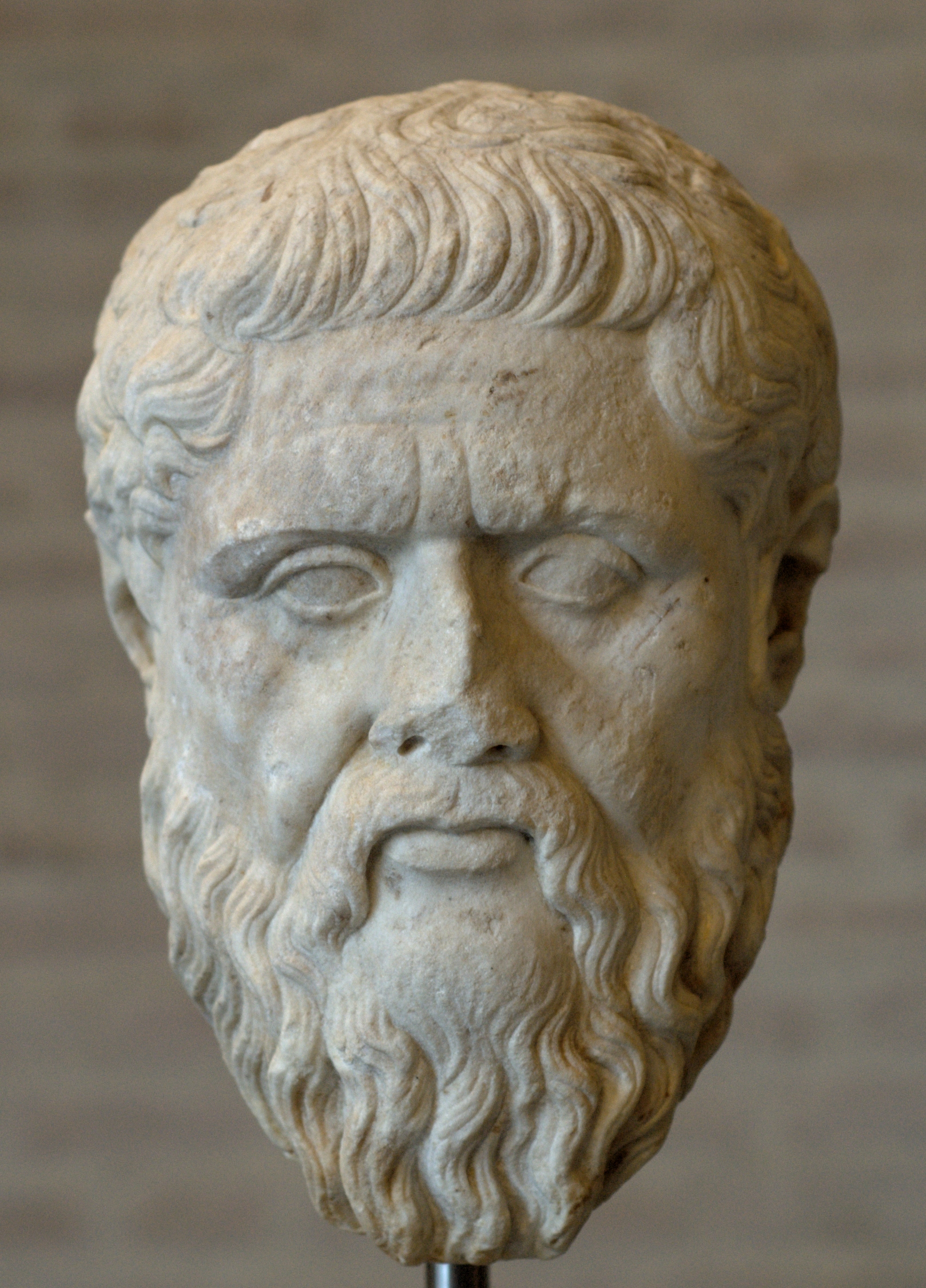
Plato
Methodology
Plato reasons through dialectical ascent from particular instances toward universal Forms. He mistrusts empirical flux and sensation, seeking immutable truth through rational contemplation of what truly *is* rather than what merely *appears*. His method proceeds by question-and-answer (elenchus) to expose contradiction, then moves upward through hypothesis toward unhypothesized first principles—the Good itself. Mathematical abstraction serves as his model: geometry reveals eternal truths independent of physical diagrams. The philosopher must turn from shadows on the cave wall toward the intelligible sun, using reason alone to grasp being beyond becoming. Knowledge (episteme) demands certainty; mere opinion (doxa) tracks the changeable world. The soul's recollection (anamnesis) of Forms encountered before birth grounds all genuine learning.
Sample argument
Consider justice: most people point to just acts—returning debts, helping friends—but cannot define justice itself. We must ask not *which* things are just but *what* justice is, the Form that makes all just things just. A beautiful statue crumbles; the Form of Beauty remains. The sensible world offers only approximations, copies of eternal patterns. If we mistake copies for originals, we anchor knowledge in flux and illusion. But the rational soul can ascend: through mathematics we grasp truths unchanging; through dialectic we rise to the Form of the Good, which illuminates all other Forms as the sun illuminates visible things. Only the philosopher who has glimpsed this highest reality can govern justly, for only he knows what justice truly is, not merely its shadow-play in the cave of political opinion.
Cognitive style
Themes
Traits
Topics
- Ethics — Virtue is knowledge of the Good; vice is ignorance. The soul has three parts (reason, spirit, appetite) and justice consists in each part performing its proper function under reason's rule. The philosopher who knows the Form of the Good lives the best life. Ethical and political questions are inseparable.
- The Self — The soul is immortal, tripartite, and undergoes reincarnation. The rational part has affinity with eternal Forms and should rule the spirited and appetitive parts. The unexamined life is not worth living. Care of the soul is the highest human task.
- Epistemology — Knowledge requires certainty and unchanging objects—therefore only Forms can be known. Sense perception yields mere opinion about flux. True learning is recollection (anamnesis) of what the soul knew before embodiment. Dialectic is the supreme method for ascending to first principles.
- Governance — Only philosophers who have grasped the Form of the Good possess the knowledge to rule justly. The ideal state mirrors the tripartite soul with philosopher-kings governing, guardians defending, and producers providing. Democracy and tyranny are degenerate forms. Rule requires wisdom, not popular consent.
- Education — Education is turning the soul from shadows to light, not putting knowledge in but drawing out what the soul already knows through recollection. Curriculum should progress from gymnastics and music through mathematics to dialectic. Only the philosophically gifted should receive complete education.
- Science — Natural philosophy is at best a 'likely story' about the realm of becoming. Mathematics deals with unchanging objects and deserves study as preparation for dialectic. Astronomy should study ideal mathematical motions, not merely observe celestial movements.
Image: Silanion (Public domain) · Source