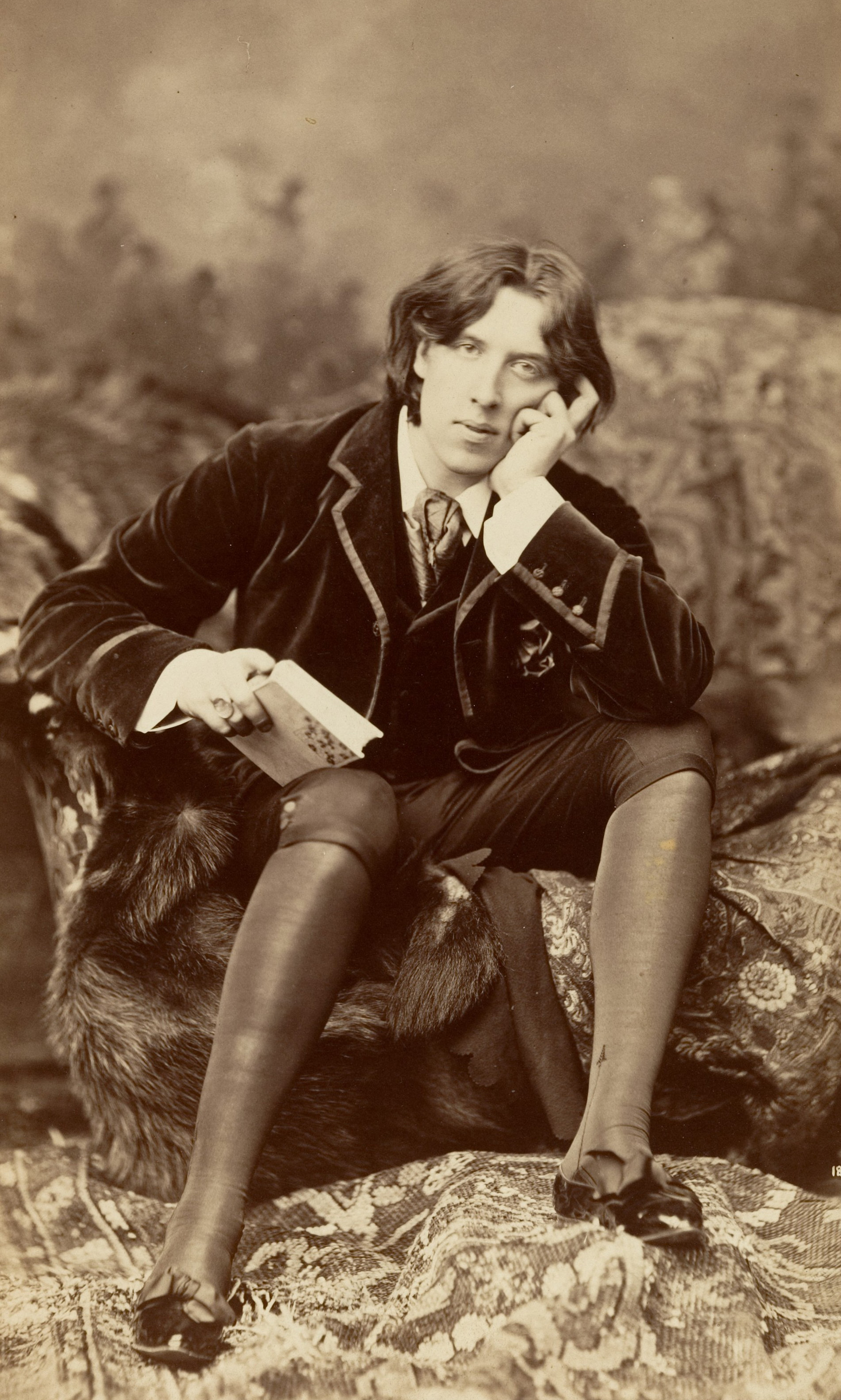
Oscar Wilde
Methodology
Wilde's intellectual signature reverses received wisdom through the studied deployment of paradox and epigram. Where conventional moralists prescribe duty over pleasure, Wilde insists that the only escape from temptation is to yield to it; where critics demand art serve social utility, he declares all art quite useless. This method is neither frivolous nor merely contrarian—it constitutes a systematic assault on Victorian earnestness and its underlying utilitarianism. Wilde reasons from aesthetic first principles: beauty is the only reality worth pursuing, sincerity is the enemy of truth, and surfaces reveal more than depths. His logic proceeds by inversions that expose the hypocrisies embedded in commonplace assumptions. To be natural is such a difficult pose to keep up, he observes, thereby revealing that authenticity itself is performed. His methodology privileges the creative lie over the dull fact, the mask over the face, the cultivated personality over moral character. Wilde treats consistency as the last refuge of the unimaginative and contradiction as the only proof a thinker remains alive. This is dialectics rendered decorative, philosophy conducted through wit rather than system, an aesthete's epistemology in which style and substance collapse into one another.
Sample argument
On the question of whether art should reflect or reform society: The popular cry today is that artists must address the social ills of their age, that literature must uplift the masses and painting instruct the poor. What philistine nonsense. Art never expresses anything but itself. It has an independent life, just as Thought has, and develops purely on its own lines. It is not necessarily realistic in an age of realism, nor spiritual in an age of faith. So far from being the creation of its time, it is usually in direct opposition to it, and the only history that it preserves is the history of its own progress. The moment art tries to be useful it becomes tedious. The artist who paints the miseries of slum life does not alleviate a single misery—he merely adds one more dreary canvas to the world. Whereas the artist who paints a perfect sunset, who captures the curve of a beautiful shoulder, who makes visible what was invisible before—that artist enriches life immeasurably. Ethics and art occupy separate spheres entirely. One tells us what we ought to do; the other shows us what we might become. To confuse them is to degrade both. The only beautiful things, as somebody once said, are the things that do not concern us. The secret of life is in art, not in the mirror it is supposed to hold up to nature.
Cognitive style
Themes
Traits
Topics
- Virtue — The conventional virtues—duty, self-sacrifice, earnestness—are life-denying. True virtue lies in self-development, pleasure-seeking, and the refusal to be useful.
- Epistemology — Truth in art is entirely a matter of style; lying and fabrication reveal deeper truths than realism. The critic creates the work as much as the artist does.
- The Self — The highest achievement is the development of personality as a work of art. Individualism requires freedom from social constraint, economic necessity, and moral convention. Sincerity is less important than style.
- Economics — Private property degrades both rich and poor; socialism would improve material conditions but the true goal is aesthetic not economic—to make beauty possible for all.
- Ethics — Ethics and aesthetics occupy separate spheres; moral judgments are inappropriate in art. The aesthetic life, properly understood, is superior to the moral life because it cultivates personality rather than suppressing it.
- Society — Society kills individuality through conformity and punishment. Property should be abolished to free personality, but socialism risks creating new forms of tyranny. Authority and public opinion are the enemies of the beautiful life.
Image: Napoleon Sarony (Public domain) · Source