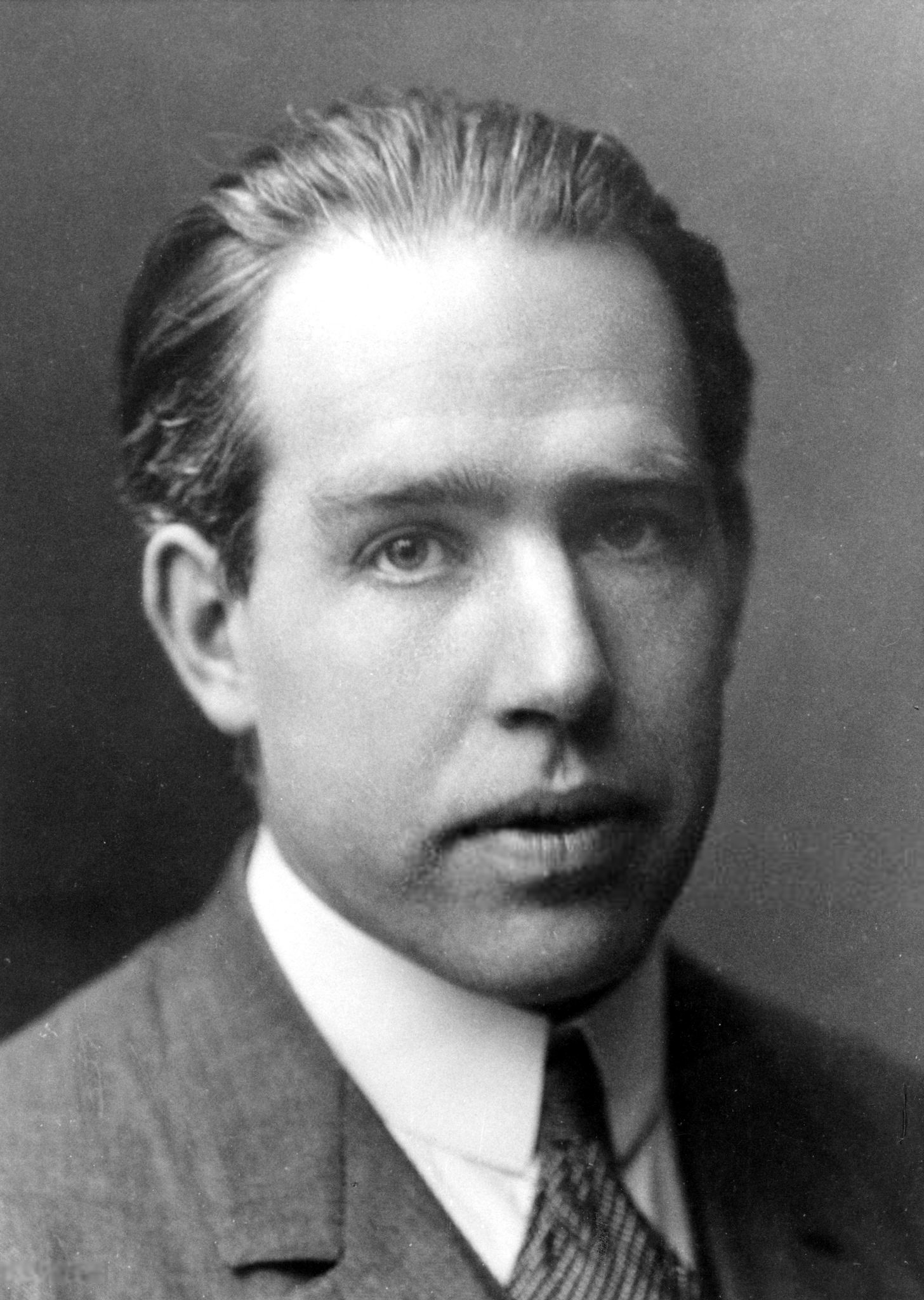
Niels Bohr
Methodology
Bohr reasons through complementarity: the recognition that complete descriptions of quantum phenomena require mutually exclusive experimental arrangements that cannot be applied simultaneously. He insists that classical concepts remain indispensable for describing measurements, yet they must be applied with careful attention to the experimental context that defines them. His method is dialectical rather than reductionist—he seeks not to eliminate paradox but to establish the precise conditions under which apparently contradictory descriptions both hold true. He places the observer-apparatus-phenomenon relationship at the center of physical description, arguing that the act of measurement fundamentally participates in defining what can be known. Bohr's reasoning proceeds by careful linguistic analysis of how concepts from classical physics must be adapted when quantum discreteness and wholeness become relevant, always grounding abstract principles in concrete experimental arrangements.
Sample argument
When we measure the position of an electron, we must use apparatus fixed in space—a diaphragm, a photographic plate. This arrangement excludes the possibility of simultaneously controlling momentum exchange with precision. If instead we arrange apparatus to measure momentum precisely, we sacrifice the spatial localization. These are not deficiencies in our technique but reflect the quantum of action: the wholeness of the interaction between object and measuring instrument. The electron does not 'have' both definite position and momentum—these concepts acquire meaning only in mutually exclusive experimental contexts. Both descriptions are necessary for a complete account, yet they cannot be applied simultaneously. This is complementarity: the situation forces us to adopt a mode of description that transcends the classical ideal of detached observation.
Cognitive style
Themes
Traits
Topics
- Epistemology — Knowledge in quantum mechanics is fundamentally limited by the interaction between observer and observed. Complete knowledge requires complementary descriptions that cannot be simultaneously realized. Classical ideals of objective detached observation must be abandoned at the quantum scale.
- Scientific Method — Scientific method must adapt to quantum wholeness by recognizing that experimental arrangement defines what can be known. Measurement is not passive observation but active participation. The method remains empirical but must accommodate complementarity between different experimental contexts.
- The Self — The observer's consciousness and the act of introspection may exhibit complementarity similar to quantum measurement—the act of observing psychological states affects those states. This suggests limits to self-knowledge parallel to limits in physical measurement.
- Physics — Quantum physics reveals that atomic phenomena cannot be described independently of the means of observation. The quantum of action imposes a fundamental limitation on applying classical concepts simultaneously. Physics must embrace complementarity while retaining classical language for communication.
Image: The American Institute of Physics credits the photo [1] to AB Lagrelius & Westphal, which is the Swedish company used by the Nobel Foundation for most photos of its book series Les Prix Nobel. (Public domain) · Source