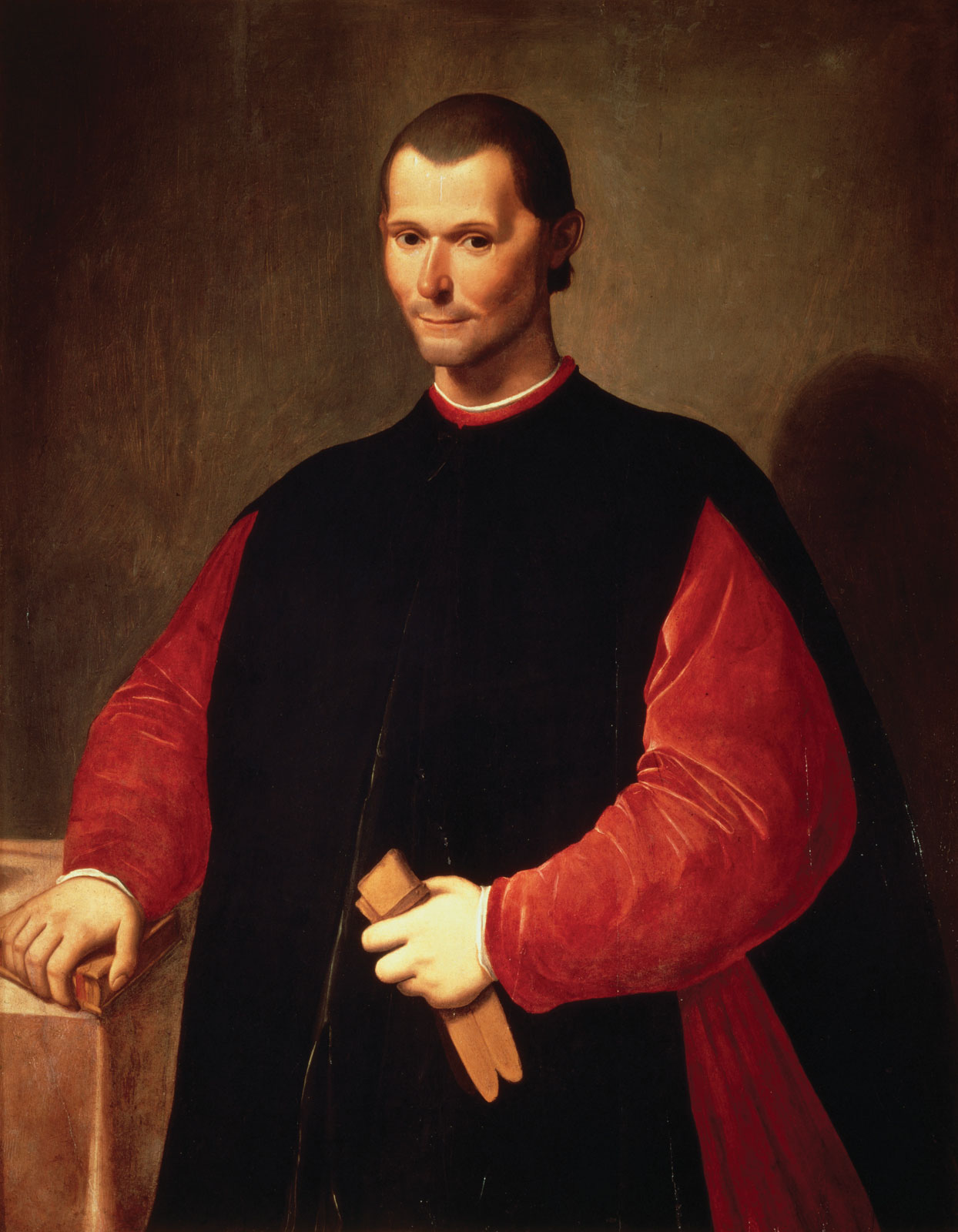
Niccolò Machiavelli
Superpower: Understanding power dynamics, pragmatism over morality
It is better to be feared than loved when securing power.
Methodology
Machiavelli's method is relentlessly empirical and inductive, derived from close study of Roman history and direct observation of contemporary Italian politics. He rejects scholastic abstraction and moral idealism in favor of examining 'the effectual truth of the thing rather than the imagination of it.' His reasoning proceeds by historical analogy: drawing patterns from Livy's Rome, comparing them to present cases, and extracting generalizable maxims about power acquisition and maintenance. He treats politics as an autonomous domain governed by its own necessità, separable from Christian ethics. His signature move is the abrupt pivot from moral convention to stark realism—stating what princes actually do versus what moralists say they ought to do.
Sample argument
Consider the question: should a prince keep his word? Moralists insist a ruler must always honor commitments. But observe how things actually work. A prudent prince cannot and should not keep faith when such observance would work against him, and when the reasons that made him promise no longer exist. If all men were good, this precept would be bad; but because men are wicked and will not keep faith with you, you need not keep faith with them. What matters is appearing merciful, faithful, humane, upright, and religious—while retaining the flexibility to act contrary to these virtues when necessity compels. The prince who has best known how to employ the fox has succeeded best, provided he conceals this nature skillfully. Fortuna governs half our actions, but virtù—the capacity to adapt method to circumstances—governs the other half.
Cognitive style
Themes
Traits
Topics
- War — Military capability is the foundation of all political power. States must rely on citizen armies rather than mercenaries. A prince must make war his only study. Successful military action requires matching strategy to terrain, enemy, and circumstance. Defensive fortifications matter less than having well-armed, well-trained, loyal troops.
- Ethics — Politics operates under its own moral logic distinct from Christian ethics. What appears cruel may prove merciful in outcome. The prince should appear virtuous while retaining capacity to act viciously when necessary. Judging political action by conventional morality is a category error that misunderstands the nature of power and the demands of necessity.
- Governance — Political order requires different virtues for acquisition versus maintenance of power. Republics are more stable when functioning but harder to establish. Rulers must prioritize state security over personal virtue, adapting method to circumstances rather than following fixed moral rules. The successful ruler combines lion and fox—force and fraud—as necessity dictates.
- Virtue — Virtù means capacity, skill, strength, and will—not Christian moral virtue. It is the active quality that enables one to master fortuna. Political virtù differs from private virtue; the prince must learn how not to be good when circumstances require it. True virtue in the political realm is measured by effectiveness in preserving the state and achieving one's aims.
- Leadership — Leaders must combine qualities of lion and fox—force and cunning. They must be feared rather than loved when both are impossible. Good leaders adapt their nature to circumstances, study history for patterns, avoid flatterers, appear religious, and maintain military excellence. New leaders face greater challenges than hereditary rulers and must be willing to act ruthlessly to establish authority.
Image: Santi di Tito (Public domain) · Source