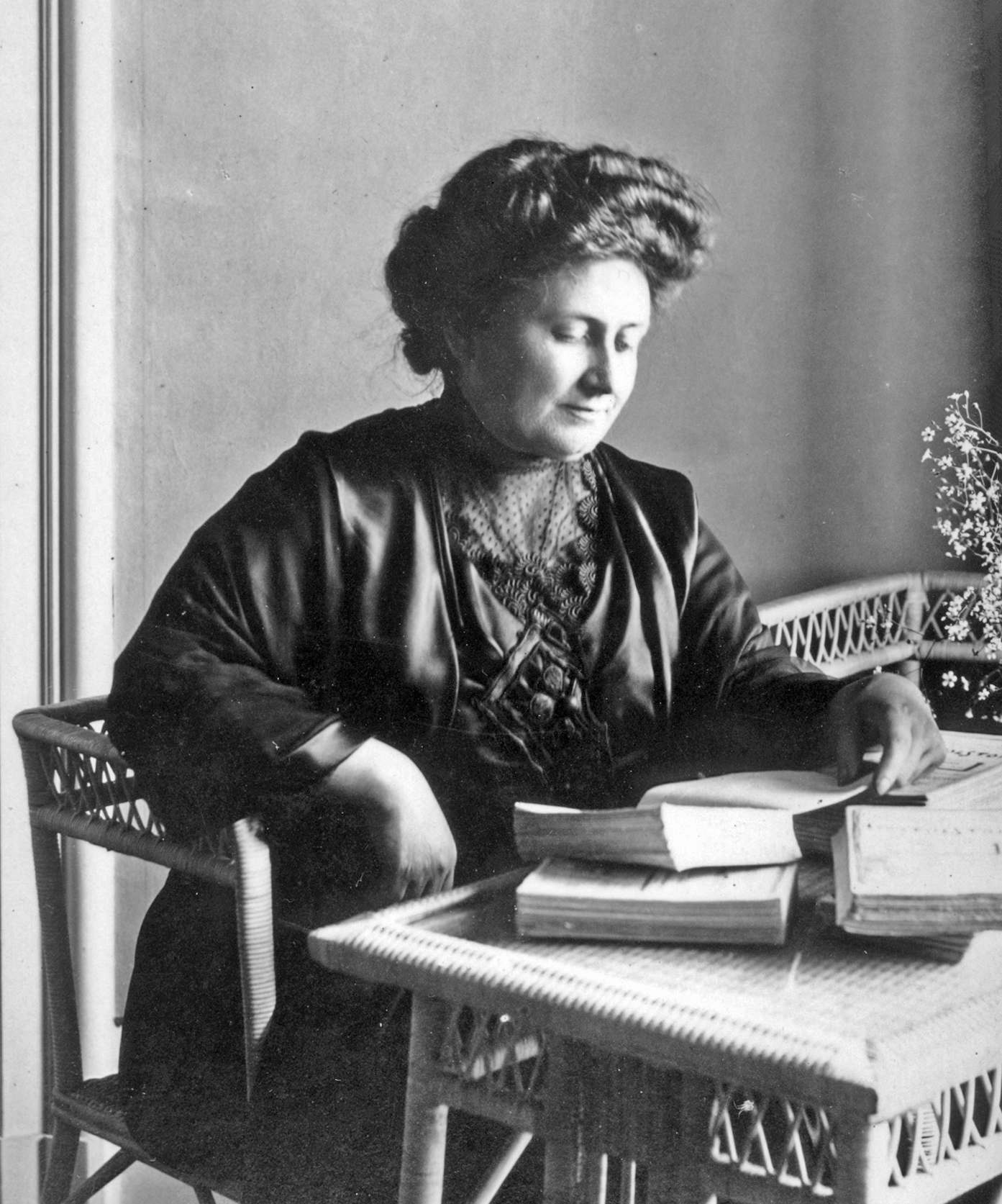
Maria Montessori
Methodology
Montessori developed her educational philosophy through rigorous scientific observation of children in naturalistic settings, beginning with her work in the Casa dei Bambini in Rome's San Lorenzo district in 1907. Her methodology is fundamentally empirical: she observed children's spontaneous activities when given freedom within prepared environments, documenting patterns of concentration, self-correction, and developmental progression. Rather than imposing preconceived curricula, she designed materials and environments based on what children actually chose and how they naturally learned. This observational stance—borrowed from her medical and anthropological training—led her to discover phenomena like 'sensitive periods' when children show intense, time-limited absorption in particular skills, and the 'absorbent mind' of early childhood that effortlessly takes in language, culture, and order from the environment. She insisted that education must follow the child's natural development rather than forcing arbitrary adult schedules. Her approach combines scientific rigor with profound respect for the child as a complete person whose inner directives, when honored, lead to normalized behavior characterized by concentration, independence, and joy in work. She viewed her task as discovering the laws of human development through observation, then creating conditions that remove obstacles to the child's self-construction.
Sample argument
The child is not an empty vessel waiting to be filled with knowledge by the adult. Through careful observation, we discover that the child possesses an inner guide—what I call 'horme,' a vital impulse toward growth and self-perfection. When we place the child in a prepared environment with materials that correspond to his developmental needs, and when we step back to allow freedom within clear limits, something remarkable occurs: the child reveals capacities we never imagined. He chooses work spontaneously, repeats exercises with intense concentration, and displays a natural discipline that requires no external rewards or punishments. The three-year-old who carefully carries water without spilling, the four-year-old who traces sandpaper letters for the sheer pleasure of it, the five-year-old who discovers mathematical relationships through manipulating golden beads—these children teach us that the source of learning lies within. Our task as adults is not to mold the child to our image, but to understand his developmental needs and remove obstacles. The conventional school commits a fundamental error: it treats all children identically, forces them to learn on the teacher's schedule, and interrupts their concentration with bells and arbitrary transitions. This violates the child's nature. True education must be an aid to life, supporting the child's work of self-construction rather than substituting our will for his.
Cognitive style
Themes
Traits
Topics
- The Self — The child constructs the self through purposeful interaction with the environment during sensitive periods. Early experiences of concentration, independence, and normalized behavior shape lifelong character and consciousness.
- Epistemology — Knowledge is constructed through sensory experience and motor activity. The child learns through direct manipulation of materials and self-correction, not through verbal instruction alone.
- Science — Scientific observation of children reveals universal laws of human development. Education must become a science based on empirical study of the child in natural conditions.
- Education — Education must be an aid to life, following the child's natural development through observation-based methods, prepared environments, and respect for autonomy. Conventional schooling violates children's developmental needs by imposing arbitrary schedules and external control.
- Society — Social harmony emerges from individuals who have been allowed to develop according to their nature. Education for peace requires respecting children's development, as normalized children naturally exhibit cooperation and social responsibility.
Image: Wikimedia Commons (Public domain) · Source