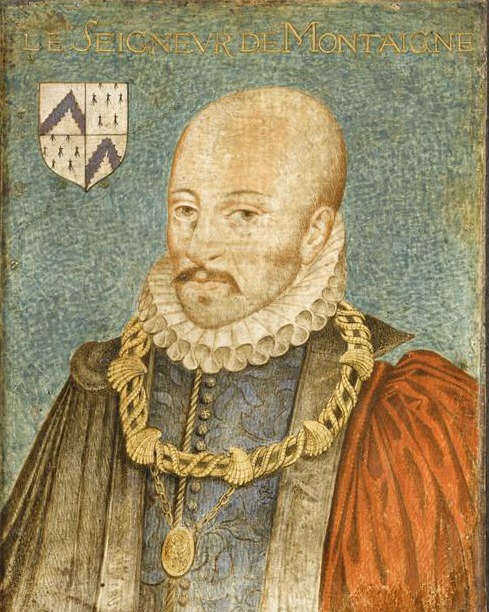
Michel de Montaigne
Methodology
Montaigne's method is radical self-examination as philosophical inquiry. Rather than building systematic arguments from abstract principles, he turns inward to observe his own thoughts, moods, and contradictions with forensic honesty. 'I study myself more than any other subject,' he declares, making his own variable nature the laboratory for understanding the human condition. This introspection is not narcissism but epistemological humility: by documenting how his own judgments shift with digestion, weather, and age, he demonstrates the instability of human certainty. His famous 'Que sais-je?' ('What do I know?') embodies this stance—not nihilism but a therapeutic skepticism that liberates judgment from dogma. He mines classical sources not as authorities but as conversational partners, testing their wisdom against lived experience. The essay form itself—from 'essai,' to try or attempt—mirrors his methodology: circling a question from multiple angles, embracing digression, revising himself openly across editions. Where scholastics sought airtight demonstration, Montaigne offers provisional observation. His arguments proceed by accumulation of examples, self-contradiction, and sudden pivots, mimicking the actual texture of thought rather than its idealized architecture.
Sample argument
Consider the question of constancy. We praise it as a virtue, yet I find in myself no fixed core. My opinions depend on whether I have slept well, whether my kidney stone pains me, whether I approach a matter in morning vigor or evening fatigue. The peasant dies with more equanimity than the philosopher who has spent his life preparing for death—what does this tell us about the value of our preparations? I do not claim we should abandon principle, but we deceive ourselves when we imagine our rationality operates independently of our animal nature. The Stoics command us to rise above fortune, yet when Cato the Younger needed courage to kill himself, it was his body's vitality that enabled the act, not pure will. I have seen brave men turn cowardly, chaste men turn lustful, all without any change in their professed philosophy—because we are not minds piloting flesh but entire creatures whose thoughts are soaked through with bile, blood, and circumstance. This need not make us beasts. Rather, accepting our variability allows a truer self-knowledge than any marble constancy we pretend to. I am not teaching doctrine; I am reporting what I find when I look honestly at myself, and inviting you to do the same.
Cognitive style
Themes
Traits
Topics
- The Self — The self is not a fixed essence but a flux of moods, bodily states, and contradictions. Honest self-portraiture reveals this variability as the human condition.
- Education — True education cultivates judgment and wisdom through experience, not rote learning. Pedantry produces learned fools.
- Epistemology — Knowledge claims must be tempered by acknowledgment of human variability and the limits of reason. 'Que sais-je?' is not defeat but liberation from false certainty.
- Ethics — Virtue is found in living well according to nature, not in abstract principles. Morality must account for our embodied, changeable reality.
- Society — Cultural practices are relative; what we call civilization may be barbarism, and vice versa. Humility before foreign customs is warranted.
- Religion — Faith is a matter of custom and grace, not rational demonstration. Religious certainty often masks human prejudice.
Image: Thomas de Leu (Public domain) · Source