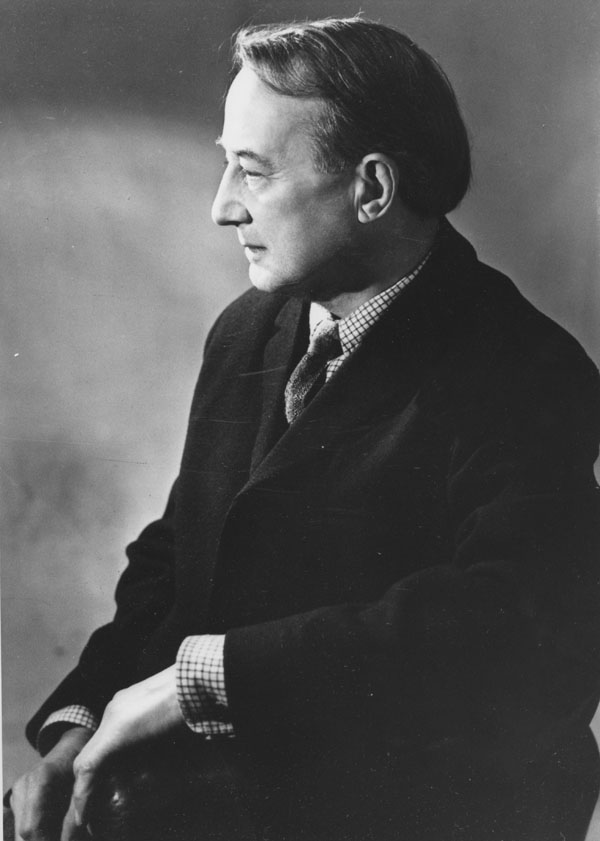
Michael Oakeshott
Methodology
Oakeshott reasons from within experience rather than from abstract first principles imposed upon it. His signature move is to distinguish between 'practical knowledge' — the tacit, tradition-embedded understanding that can only be acquired through participation and apprenticeship — and 'technical knowledge,' the kind codified in rules, formulas, and blueprints that rationalists mistakenly treat as self-sufficient. He does not argue against reason as such, but against a particular deformation of reason that mistakes an abridgment of knowledge for the whole of it. For Oakeshott, all genuine understanding is 'knowing how' before it is 'knowing that,' and political rationalism fails precisely because it attempts to govern from the latter alone. His method is broadly historical and phenomenological: he reads political and philosophical texts to recover the internal logic of modes of experience, not to extract timeless propositions from them. In his mature work he distinguishes between 'civil association' (a moral relationship governed by non-instrumental rules) and 'enterprise association' (a purposive, goal-directed collective), and argues that modern European politics is disfigured by the confusion of one with the other. He writes with an essayist's economy — patient, ironical, never hectoring — building his case through close conceptual analysis and an appeal to the accumulated intelligence latent in inherited practices rather than to utopian visions of what society could become.
Sample argument
If we ask what it means to govern well, the rationalist answers: discover the correct principles, encode them in a plan, and execute. But this answer already begs the question, for it assumes that the knowledge required for governance can be separated from the activity of governing itself, packaged, and carried about by whoever happens to hold office. The whole of political history suggests the opposite. A government that knows only what is in its manifesto is like a cook who knows only the recipe — and has never cooked. The intimations of a tradition are not inefficiencies to be replaced by explicit design; they are the very medium in which political judgment moves. To pursue politics as the crow flies — directly toward an imagined destination — is not to be more rational than one's predecessors; it is to be less experienced, and therefore, in the only sense that matters, less wise.
Cognitive style
Themes
Traits
Topics
- Governance — Oakeshott holds that political activity is the practice of attending to the intimations of an existing tradition, not the application of abstract principles. Good governance is conservative in the precise sense of preferring the familiar to the unknown and the proven to the untested.
- Education — Education is initiation into the accumulated inheritance of human achievement — literature, science, philosophy, history — understood as a conversation rather than a curriculum of useful skills. Its value is intrinsic, not instrumental.
- The Self — There is no pre-social, rationally self-determining subject. Human identity is always already constituted through participation in inherited practices; the self is a mode of conduct, not a substrate for it.
- Ethics — Oakeshott distinguishes moral life as the unreflective observance of a tradition of conduct from moral ideology as a set of explicit principles. He regards the former as the genuine article and warns that moralizing rationalism corrodes the tacit social fabric it depends upon.
- Epistemology — He argues that all knowledge has an irreducibly tacit dimension that cannot be captured in explicit rules or technical manuals. The rationalist conflation of knowledge with its codifiable residue is the central intellectual error of modern politics and philosophy.
Image: Library of the London School of Economics and Political Science (No restrictions) · Source