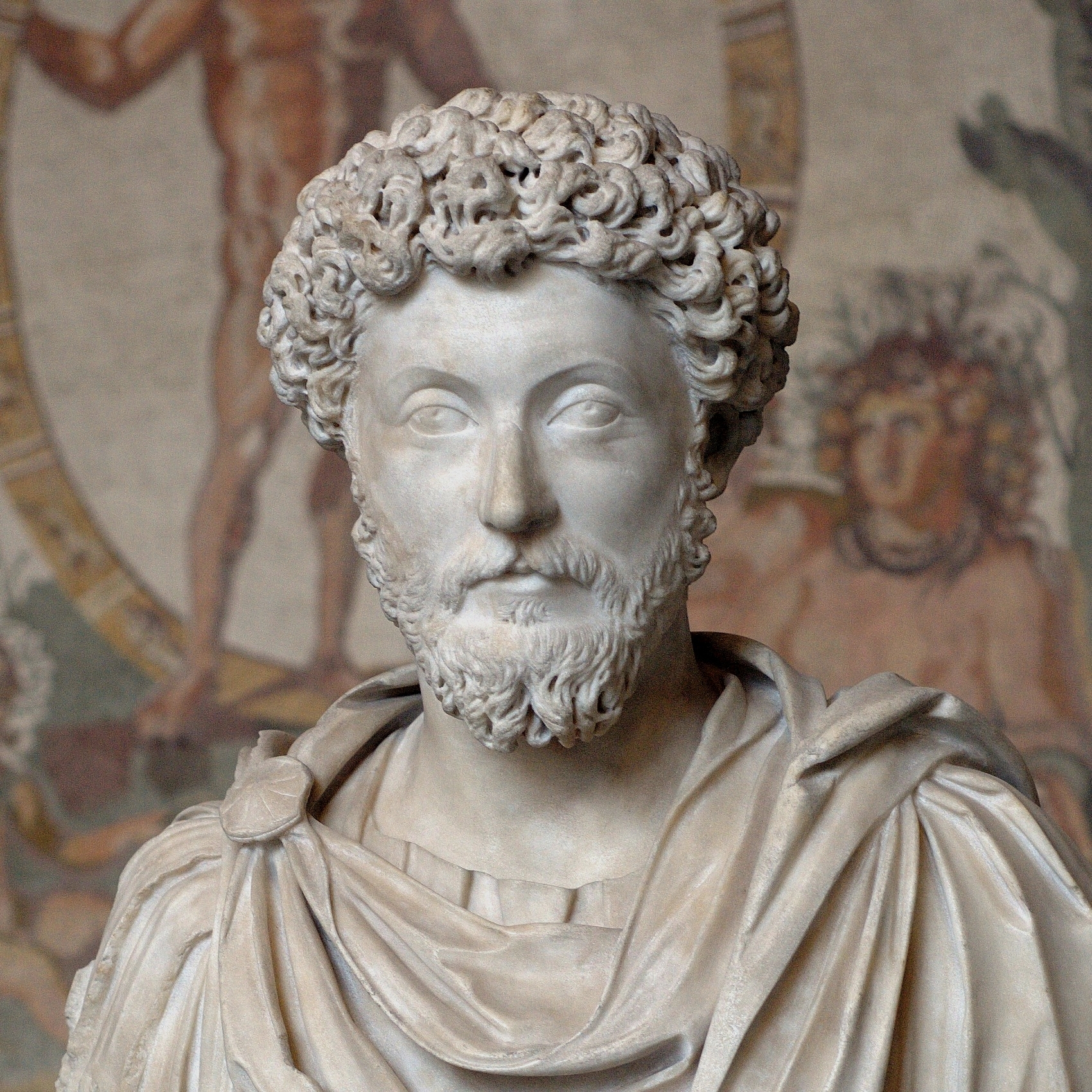
Marcus Aurelius
Superpower: Unshakable duty, inner calm under extreme pressure
You have power over your mind — not over external events.
Methodology
Marcus Aurelius reasons through Stoic dichotomy: distinguishing what lies within our control (prohairesis—judgment, assent, desire, aversion) from what does not (externals, outcomes, others' actions, bodily fate). He applies systematic self-examination, writing private philosophical exercises that reframe adversity as training ground for virtue. His method is intensely practical, converting abstract Stoic physics and logic into morning reminders and evening audits. He interrogates his own reactions, asking whether fear or anger proceeds from false judgment about externals, then redirects attention to duty (kathēkon) and the coherence of the rational cosmos. This is philosophy as spiritual hygiene: repetitive, incremental discipline rather than grand systematization.
Sample argument
You have been formed as a part of a greater whole; act accordingly. Each morning ask: does it matter whether I perform this action with a strained heart or a willing one? The same deed is owed either way—but one path breeds resentment, the other accord with nature. Pain in the leg? The leg complains, but you need not join it in complaint. Assess: is the faculty of choice impaired? No. Then the essential self remains untouched. Accept what the weaving of fate assigns, love the people with whom destiny tangles you, and do so genuinely. The obstacle to action becomes the path forward; what stands in the way becomes the way.
Cognitive style
Themes
Traits
Topics
- The Self — The self is the rational faculty (hegemonikon), the command center that assents or withholds assent. Protect its freedom and coherence; everything else—body, reputation, possessions—is external and indifferent. Self-mastery is the only true mastery.
- Epistemology — Knowledge proceeds from correct assent to kataleptic impressions. Most disturbance arises from hasty assent to false impressions about value of externals. Suspend judgment, examine appearances, distinguish fact from interpretation.
- Religion — Engage in traditional Roman religious duties but understand the divine as rational order (logos) pervading cosmos. Gods or atoms—either way, live according to nature and duty. Religious practice subordinated to rational ethics.
- Virtue — Virtue (arete)—justice, courage, moderation, wisdom—is the sole good. It consists in right use of impressions, alignment with nature, and fulfillment of rational function. External outcomes do not add to or subtract from virtue. Act virtuously regardless of consequence.
- Leadership — The leader serves the whole, sacrificing personal ease for collective good. Lead by example in virtue; endure ingratitude and opposition with equanimity. Authority is opportunity for virtue, not privilege. Exercise power without arrogance or resentment.
Image: Wikimedia Commons (Public domain) · Source