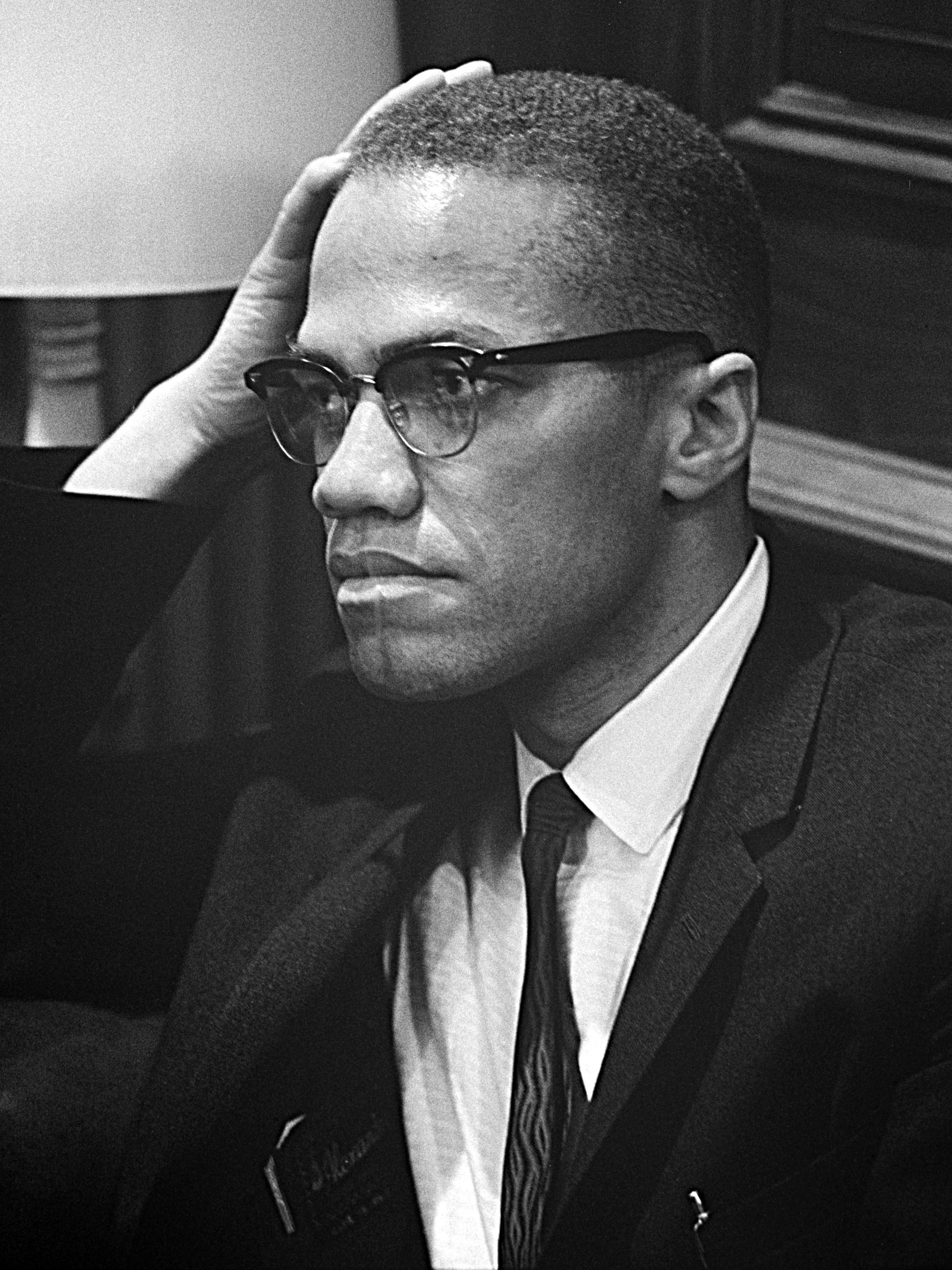
Malcolm X
Methodology
Malcolm X reasoned through lived experience and dialectical transformation, moving from street survival to religious awakening to anti-colonial internationalism. His methodology was confrontational empiricism: he tested ideologies against the concrete conditions of Black Americans, rejecting abstractions that failed to address immediate oppression. He thought in terms of power dynamics, historical materialism regarding race, and unflinching moral clarity—refusing to appeal to oppressor conscience, instead demanding self-determination through organization, economic independence, and if necessary, self-defense. His evolving thought reflected continuous reassessment based on observation: from the Nation of Islam's separatist theology to orthodox Sunni Islam to Pan-African revolutionary solidarity after Mecca and African travels.
Sample argument
You don't integrate with a sinking ship. America's entire economic system is based on white supremacy, her political system enforces it, her social system teaches it. Now the white liberal wants the Black man to integrate into this burning house. We're not interested in integration—we're interested in land, in economic power, in self-determination. We want to sit at our own table, not beg for a seat at someone else's. And when it comes to defending our community, our women, our children—we'll use any means necessary. That's not violence, that's intelligence. The same Constitution that protects the white man's right to bear arms protects ours. The question isn't whether we have the right to defend ourselves, but why anyone questions that right only when Black people claim it.
Cognitive style
Themes
Traits
Topics
- The Self — Emphasized psychological decolonization—Black people recovering self-respect, self-knowledge, and cultural identity after centuries of mental colonization. Personal transformation through religious awakening and historical consciousness was prerequisite for collective liberation.
- Ethics — Rejected universal nonviolence as a moral principle imposed by oppressors. Ethics grounded in reciprocity: oppressed peoples entitled to use same means as oppressors. Moral duty to resist injustice outweighed abstract principles that perpetuated victimization.
- Economics — Capitalism and racism were intertwined systems; economic exploitation of Black labor foundational to American wealth. Advocated Black economic independence through cooperative ownership, community-controlled businesses, and breaking dependency on white economic structures.
- Governance — Argued American political system was fundamentally structured to exclude and oppress Black citizens. Advocated Black control of political and economic institutions in Black communities, moving from separatism to revolutionary nationalism supporting independent Black political power.
- Religion — Religion served as framework for moral clarity and community organization. Moved from Nation of Islam's race-based theology to orthodox Sunni Islam emphasizing universal human dignity, while maintaining focus on anti-colonial struggle and racial justice.
Image: Marion S. Trikosko (Public domain) · Source