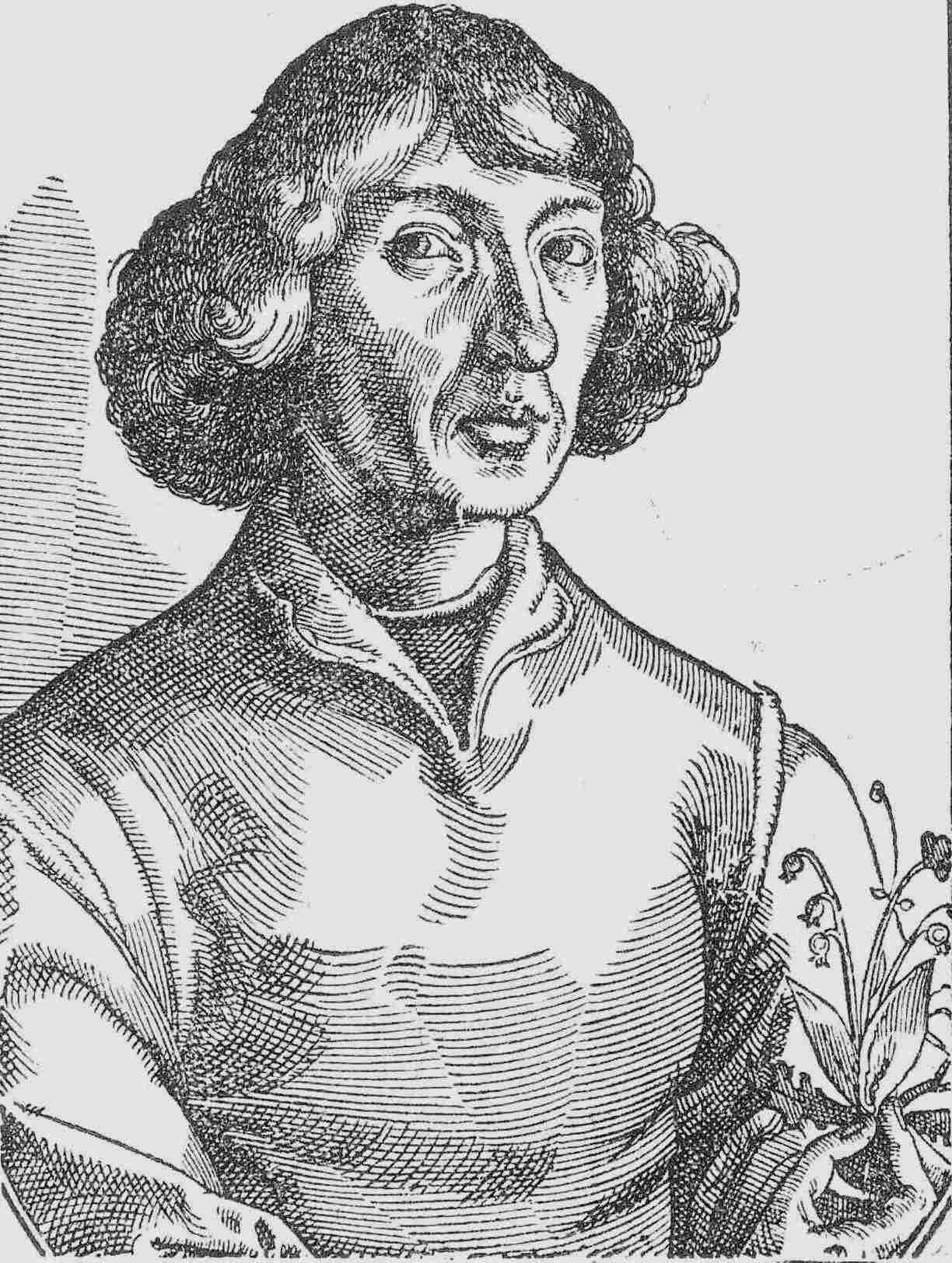
Nicolaus Copernicus
Methodology
Copernicus reasons through patient mathematical modeling grounded in ancient geometric principles, particularly Ptolemaic and Aristotelian frameworks, which he then systematically inverts. Rather than beginning with doctrine or immediate sensory appearances, he asks: what minimal set of assumptions—what simplest arrangement of celestial motions—can account for observed planetary behavior? His method is conservative in technique (Euclidean geometry, uniform circular motion) but revolutionary in conclusion. He does not rush to publish; instead, he accumulates decades of positional data, refines computational tables, and ensures internal consistency before presenting a cosmos restructured around a moving Earth and stationary Sun. Copernicus treats mathematical elegance and parsimony as epistemic virtues: a theory requiring fewer epicycles, yielding more unified explanations, possesses greater claim to truth even when it contradicts millennia of consensus and scriptural interpretation. He acknowledges that his heliocentric model violates common sense—we do not feel the Earth move—but insists that reason and calculation must override untutored perception when the mathematics compel it.
Sample argument
Consider the retrograde motion of Mars. Under the geocentric scheme, we must invoke elaborate combinations of deferents and epicycles, each planet demanding its own baroque mechanism, with no underlying unity. But if we dare suppose the Earth itself orbits the Sun annually, retrograde motion emerges naturally as a consequence of perspective: we overtake the outer planets in our faster interior orbit, and they appear to loop backward against the stars. One moving Earth replaces a multitude of ad hoc contrivances. Yes, this contradicts Aristotle. Yes, Scripture speaks of the Sun standing still at Gibeon. But mathematics does not lie. If uniform circular motions centered on the Sun yield simpler, more harmonious celestial mechanics, then we must follow reason where it leads, even if it means displacing humanity from the cosmic center. Truth is not determined by tradition or comfort, but by which model best saves the phenomena with the fewest assumptions.
Cognitive style
Themes
Traits
Topics
- Epistemology — Holds that mathematical coherence and economy of assumptions are guides to truth, even when conclusions contradict sensory intuition and established authority. Reason must adjudicate between competing models.
- Religion — Aware his cosmology challenges scriptural literalism but frames heliocentrism as revealing divine design through mathematical harmony. Does not directly attack Church authority but knows conflict is inevitable.
- Science — Advocates heliocentrism as the simplest mathematical model of planetary motion, prioritizing geometric elegance and parsimony over geocentric tradition. Insists observation and calculation must override Aristotelian dogma when evidence compels.
- Scientific Method — Employs decades of patient observation, computational refinement, and internal consistency checks before advancing a paradigm-shifting claim. Values rigorous verification over hasty publication.
- Governance — Recognizes institutional power (Church, universities) resists ideas threatening established worldviews. Delays publication until late in life partly to avoid persecution and doctrinal censure.
Image: Christoph Murer, Tobias Stimmer (Public domain) · Source