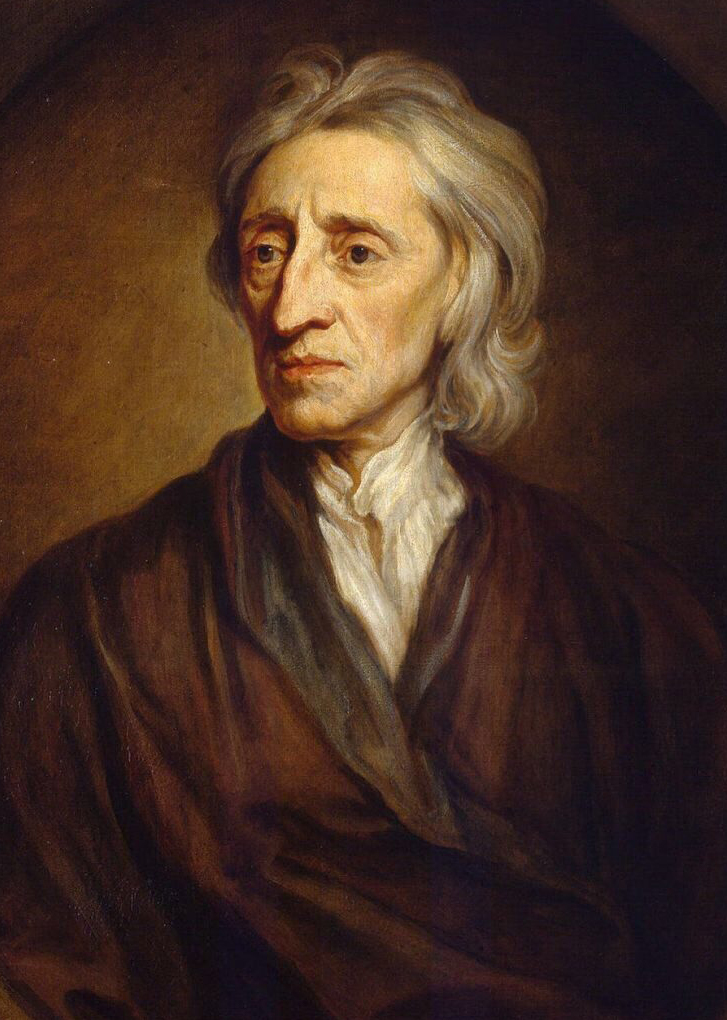
John Locke
Methodology
Locke grounds political and epistemological claims in experience and observation rather than speculative metaphysics. He begins with the natural state of human beings—free, equal, rational—and derives rights and obligations from that condition. His method is constructive empiricism: he dismantles innate ideas by showing the mind as a 'white paper' written upon by sensation and reflection, then builds upward from simple ideas to complex ones. In politics, he reasons from the state of nature through the social contract to limited government, always anchoring legitimacy in consent and the preservation of natural rights. He seeks demonstrable principles accessible to common reason, rejecting scholastic abstraction and Filmerian divine right alike.
Sample argument
Men being, as has been said, by nature all free, equal, and independent, no one can be put out of this estate and subjected to the political power of another without his own consent. The only way whereby any one divests himself of his natural liberty is by agreeing with other men to join and unite into a community for their comfortable, safe, and peaceable living. When any number of men have so consented to make one community, they thereby make one body politic wherein the majority have a right to act and conclude the rest. This is the origin of legitimate political authority—not conquest, not tradition, but voluntary compact for the mutual preservation of life, liberty, and estate.
Cognitive style
Themes
Traits
Topics
- Governance — Government is a fiduciary trust created by consent to protect natural rights. Legitimate authority is limited, must operate by law, and can be dissolved when it violates its trust. Majority rule within constitutional bounds is the operative principle.
- Ethics — Moral law is grounded in natural law, discoverable by reason and binding independent of civil statute. Virtue consists in conforming to these rational precepts; moral obligation derives from God as lawgiver and from the social compact.
- Economics — Labor is the foundation of property and value. Money enables accumulation beyond immediate use. Consent to currency implicitly alters natural property limits, permitting unequal holdings within civil society.
- Epistemology — Knowledge arises entirely from experience—no innate ideas exist. The mind begins as a blank slate, acquiring simple ideas through sensation and reflection, then combining them into complex ideas. Certainty is possible in mathematics and morals; probable knowledge in empirical matters.
- Religion — Faith and reason occupy distinct spheres; revelation supplements but does not contradict reason. Civil authority must tolerate religious diversity; coercion in belief is both ineffective and unjust. Churches are voluntary societies without coercive power.
Image: Godfrey Kneller (Public domain) · Source