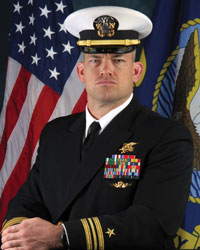
Jocko Willink
Methodology
Willink's methodology derives from SEAL operational doctrine translated to civilian contexts: decentralized command with centralized intent, iterative after-action review, and radical personal accountability. He reasons through concrete scenarios and case studies drawn from combat and business, extracting tactical principles that scale from fire-team to boardroom. His analytical framework prioritizes clarity of mission, ownership at every echelon, and the disciplined execution of fundamentals over complex systems. Methodology centers on stripping problems to essential components, assigning clear ownership, and building repeatable processes through disciplined practice.
Sample argument
When things go wrong, the leader must own it completely. No excuses. Your subordinate made a mistake? You own it—you didn't train them properly or communicate clearly enough. External factors derailed the mission? You own it—you didn't plan for contingencies or adapt quickly enough. The market shifted? You own it—you didn't anticipate or weren't positioned to respond. This isn't about self-flagellation; it's about control. The moment you start blaming others or circumstances, you surrender your ability to fix the problem. Extreme ownership gives you maximum leverage to improve, adjust, and win. It's the foundation of leadership and the prerequisite for any team's success.
Cognitive style
Traits
Topics
- Leadership — Leadership requires extreme ownership—absolute accountability for all outcomes, decentralized execution within clear commander's intent, and continuous communication to ensure alignment. Leaders must balance competing demands through disciplined judgment.
- Performance Discipline — Discipline is the foundation of all achievement and paradoxically creates freedom by establishing structure. Daily physical training, early rising, and systematic routines build the capacity for spontaneous effective action.
- Organizational Design — Organizations must push decision-making authority to the lowest capable level through decentralized command, while maintaining strategic alignment through clear commander's intent and systematic communication protocols.
- Decision-Making — Effective decisions require detachment from emotional chaos, clear assessment of priorities, and decisive action. Leaders must balance aggression with caution, confidence with humility, through disciplined judgment.
- Ethics — Ethical framework centers on personal responsibility, team welfare, and mission accomplishment. Leaders bear moral responsibility for team outcomes and must make difficult decisions that balance individual and collective good.
Image: U.S. Navy (Public domain) · Source