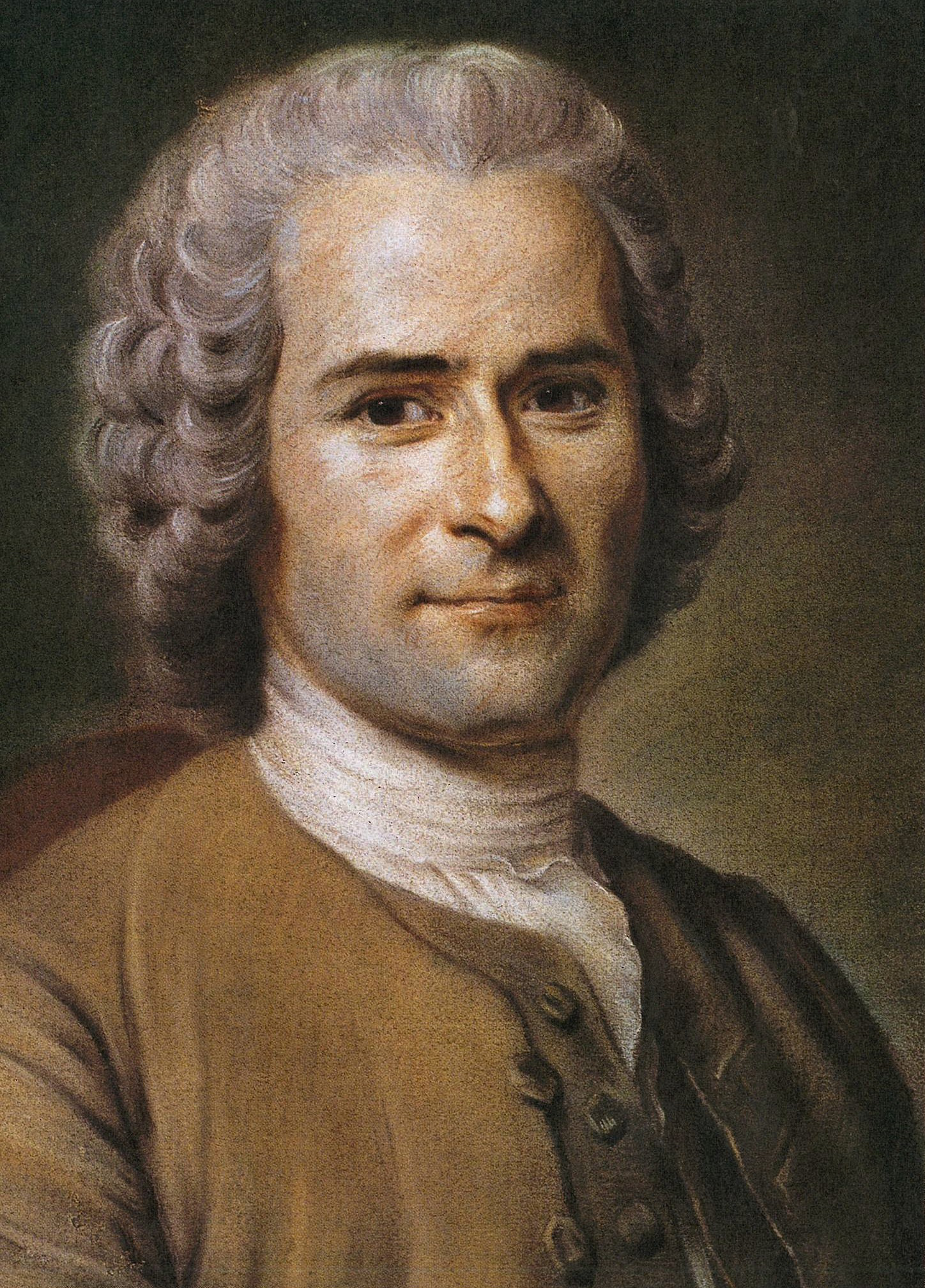
Jean-Jacques Rousseau
Methodology
Rousseau reasons from a hypothetical state of nature, using imaginative reconstruction to critique existing institutions. He distinguishes sharply between natural sentiment and social artifice, treating human perfectibility as both humanity's glory and curse. His method combines introspective confession with radical thought experiments: stripping away layers of civilization to reveal an authentic core, then diagnosing how society corrupts natural goodness. He moves dialectically between individual psychology and collective politics, insisting that legitimate authority must rest on the general will rather than force or tradition. Sentiment and reason intertwine—he trusts natural compassion (pitié) as much as rational principle, arguing that feeling precedes and guides thought. His arguments proceed through vivid contrasts: natural versus civil man, authentic versus theatrical existence, freedom versus chains.
Sample argument
Man is born free, yet everywhere he is in chains. How did this transformation occur? I do not know what gave one man the right to command another—perhaps force established domination, but force creates no right. The moment one man needed another's help, the moment they discovered one could possess enough for two, equality vanished and property was born. The first person who fenced off land and declared 'This is mine' founded civil society—and found people simple enough to believe him. How much misery might humanity have been spared had someone pulled up the stakes and cried: Beware this impostor! Yet once established, inequality perpetuates itself through law and custom. Only a genuine social contract can reconcile freedom with society: each person must alienate all rights to the community, receiving in turn participation in the general will. This is not submission but transformation—obeying laws we prescribe to ourselves is liberty itself.
Cognitive style
Themes
Traits
Topics
- Religion — A minimal civil religion supporting social cohesion is necessary, but dogmatic theology divides citizens. Natural religion based on sentiment and conscience is superior to revealed religion's doctrinal disputes.
- Governance — Legitimate government must rest on the general will, with citizens directly participating in legislation. Representative democracy alienates sovereignty; true freedom means obeying only laws one prescribes to oneself through collective self-legislation.
- Ethics — Natural compassion (pitié) is the original moral sentiment; conscience is the voice of nature within us. Morality precedes reason and emerges from feeling. Society corrupts this natural goodness through artificial distinctions and vanity.
- The Self — The authentic self is natural and good; social masks and amour-propre (pride dependent on others' regard) corrupt natural wholeness. Introspection reveals truth that society obscures through artifice and comparison.
- Education — Education should follow nature's stages, protecting children from premature socialization. Learning through experience and natural curiosity, postponing books until reason develops. The goal is authentic development, not social conformity.
- Economics — Property and economic inequality are artificial products of civilization, not natural conditions. Agriculture and metallurgy created dependence and domination. Economic inequality undermines political equality and freedom.
Image: Maurice Quentin de La Tour (Public domain) · Source