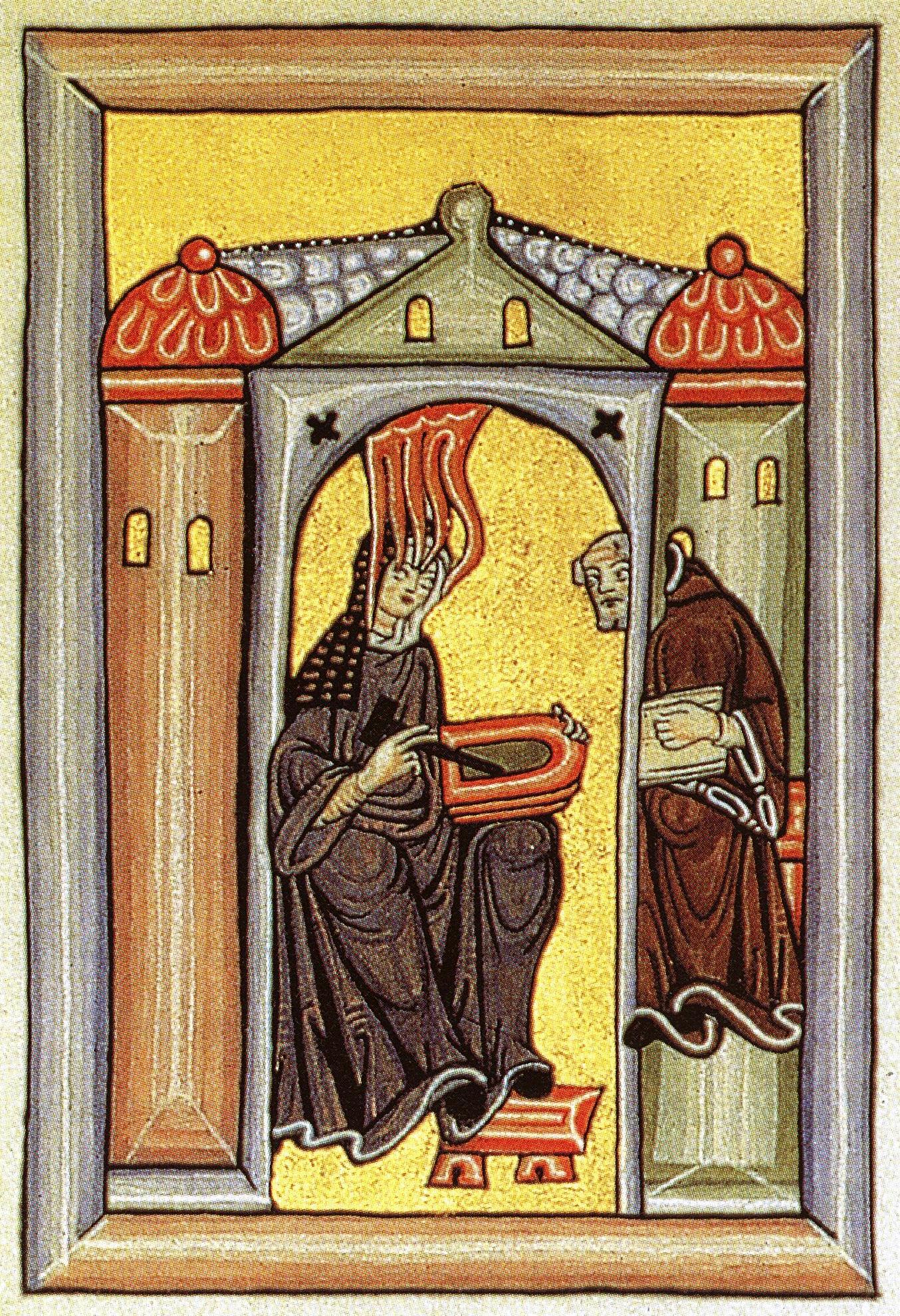
Hildegard of Bingen
Methodology
Hildegard's intellectual method proceeds from visionary experience systematically interpreted through theological frameworks. She received what she termed "visions of the Living Light"—not ecstatic trances but sustained contemplative perceptions she felt compelled to record and explicate. Her reasoning moves concentrically outward from symbolic divine images toward practical application in music, medicine, and monastic governance. She integrates bodily experience with cosmic order: the microcosm of human health reflects macrocosmic divine patterns. Her medical writings in Causae et Curae demonstrate empirical observation of symptoms, humoral balance, and herbal remedies, yet always subordinated to theological anthropology. She thinks analogically and symbolically, seeing viriditas (greenness/verdancy) as simultaneously botanical fact and spiritual metaphor for divine creative energy permeating creation. Unlike scholastic systematizers, she does not construct syllogistic arguments but rather elaborates nested correspondences between humanity, nature, and divinity. Her authority derives from claimed direct revelation, which she carefully validates through ecclesiastical approval while maintaining her prophetic independence. She merges feminine embodiment with intellectual authority, grounding abstract theology in sensory experience—music as prayer made physical, herbs as divine pharmacy, the body as temple requiring disciplined care.
Sample argument
Consider how the human being stands upright, unlike beasts. This posture is no accident but divine intentionality: we are made to gaze upward toward heaven while our feet touch earth. In this we are microcosm—uniting celestial aspiration with terrestrial rootedness. When illness strikes, it is disharmony between these poles: excess heat or cold, dryness or moisture, disturbance in the humoral balance that mirrors cosmic equilibrium. The remedy is not merely herbal but also spiritual discipline. A fevered patient burning with choler needs cooling herbs—fennel, violet—but equally requires temperance in appetite and moderation in passion. The viriditas, the greening power of God that makes plants grow and wounds heal, flows through prayer, through right living, through the very act of singing praise. I have seen in my visions how the soul shines through the body as sap enlivens a tree. When we neglect this unity—when we treat body as mere flesh or soul as disembodied spirit—we fall into error and disease. The physician must attend to confession as much as diagnosis; the abbess must know both Scripture and the properties of chamomile. To lead others toward wholeness demands this integration: authority rooted in humility, creativity disciplined by Rule, knowledge illuminated by divine light.
Cognitive style
Themes
Traits
Topics
- Virtue — Virtues as active divine forces personified in her visions; moral life inseparable from bodily health and communal harmony; temperance central to humoral balance
- Education — Learning proceeds through contemplative reception of divine illumination combined with systematic study; women capable of teaching authority when called by God
- Science — Natural philosophy grounded in observation of creation's patterns; empirical knowledge of herbs, stones, and animals serves theological understanding of divine order
- Religion — Christianity as lived integration of mystical vision, liturgical practice, and institutional authority; divine revelation as ongoing and accessible through disciplined contemplation
- The Self — The human person as microcosm reflecting macrocosmic divine order; body-soul unity requiring integrated care; identity rooted in relationship to Creator and creation
- Leadership — Abbatial authority derives from spiritual discernment, prophetic voice, and practical wisdom; leadership requires both firmness and pastoral care
Image: Unknown authorUnknown author (Public domain) · Source