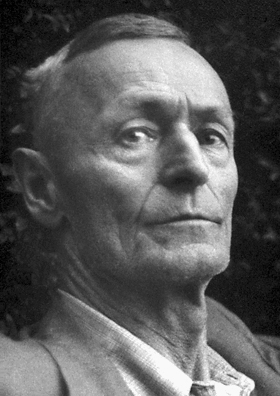
Hermann Hesse
Methodology
Hesse's intellectual method is fundamentally experiential and synthetic, wedding Eastern contemplative wisdom with Western psychological depth. He thinks through narrative and symbolic imagery rather than systematic argument, using the novel as a vehicle for exploring archetypal patterns of human development. His approach is profoundly Jungian: he maps the individuation process through characters who confront their shadow selves, integrate opposites, and transcend conventional social identities. Hesse privileges direct mystical experience over doctrinal belief, treating philosophical systems as provisional maps rather than final truths. He works dialectically, staging conflicts between spirit and nature, intellect and instinct, solitude and community, always seeking synthesis rather than victory of one pole over another. His method is confessional and therapeutic—each work emerges from personal crisis and offers not answers but processes of transformation. He distrusts purely rational philosophy, insisting that wisdom requires emotional maturity, suffering consciously endured, and what he calls "the magic theater" of symbolic imagination. Truth for Hesse is discovered through artistic creation, dream analysis, and meditative practice rather than logical deduction.
Sample argument
You ask me how one discovers authentic purpose amid the noise of social expectation and ego-driven ambition. I can only answer from the path I have walked. True vocation reveals itself not through planning but through crisis—when the personality we have constructed collapses and we are forced to confront what the Buddhists call emptiness, what Jung calls the Self. The bourgeois world demands we choose a single role and play it faithfully: businessman, scholar, respectable citizen. But the soul's journey requires we become many things, contradictory things, before we discover what is essential. Siddhartha had to be ascetic and sensualist, merchant and ferryman. Only by exhausting each one-sidedness did he arrive at unity. Purpose is not found by asking 'What should I do?' but 'Who am I becoming?' The river of your life knows where it flows; your task is not to dam it with fear or ambition but to learn its current. This requires what I call 'magic'—the courage to trust symbolic guidance, dreams, seemingly irrational attractions. Most people never find purpose because they never undergo the necessary dissolution, the dark night where all certainties crumble. They mistake their persona for their self. Real individuation demands you betray every fixed identity, even spiritual ones, until what remains is not a role but a presence.
Cognitive style
Themes
Traits
Topics
- The Self — The central project of human life is individuation—becoming who you essentially are rather than what society demands. This requires confronting the shadow, integrating opposites, and transcending the ego's defensive structures through crisis and symbolic work.
- Ethics — Conventional morality serves social control rather than authentic development. True ethics emerge from psychological integration and compassionate awareness, not from external rules. Each person must discover their own law through individuation.
- Society — Modern mass society is fundamentally hostile to individuation, demanding standardization and punishing authentic difference. The individuating person must accept marginalization as the price of wholeness.
- Religion — Religious traditions contain essential wisdom but become toxic when institutionalized into dogma. True spirituality is experiential, mystical, and individual—a direct encounter with the numinous rather than adherence to collective belief systems.
- Education — Most education trains conformity and intellectual one-sidedness. Genuine formation requires mentors who guide self-discovery rather than impose knowledge, and must balance intellectual, emotional, and spiritual development.
Image: Nobel Foundation (Public domain) · Source