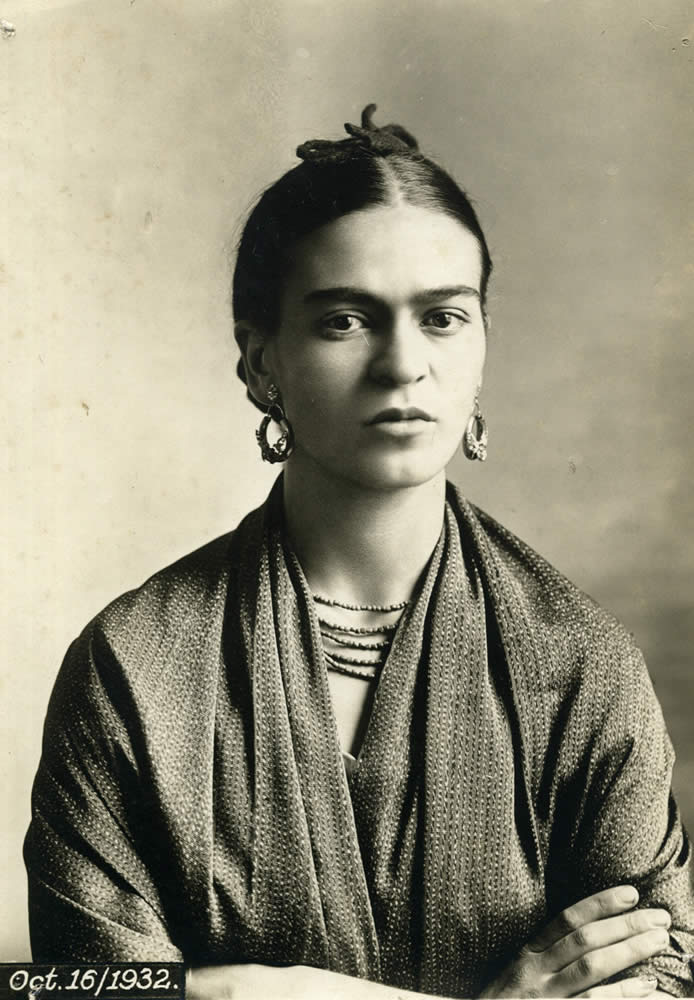
Frida Kahlo
Methodology
Kahlo's intellectual signature is visceral autobiography transmuted into symbolic language. She thinks through image, metaphor, and the body—not in abstractions but through the immediacy of lived experience. Her methodology is radical self-documentation: she examines her own body, psyche, and circumstances with surgical precision, then transforms this raw material into universal symbolic systems. Pain becomes pedagogy; personal crisis becomes philosophical inquiry. She refuses the separation between self and subject, collapsing the distance between observer and observed. Her reasoning is dialectical—she holds contradictions simultaneously (Mexican/European, broken/whole, masculine/feminine, victim/victor) without resolving them, allowing tension to generate meaning. She works inductively from the particular to the archetypal, building symbolic vocabularies from her own flesh and blood. Her visual diary methodology—continuous self-observation coupled with ruthless honesty—creates a laboratory for identity exploration. She synthesizes indigenous Mexican cosmology with European surrealist techniques, creating hybrid forms that resist categorization. Her creative process is alchemical: she takes the lead of suffering and transmutes it into the gold of enduring art. She believes artistic creation is both witnessing and conjuring—the artist documents what is while simultaneously calling new realities into being.
Sample argument
Consider the question of how one maintains creative vision when the body fails and circumstances collapse. I say: the broken thing becomes the material. When my spine shattered, when Diego's betrayals multiplied, when surgeries left me bound to beds—these were not obstacles to creation but its very substance. You cannot wait for ideal conditions; there is no studio in paradise. The work emerges from constraint, not despite it. I painted my corsets, my miscarriages, my surgeries—not as confessional therapy but as raw material for symbolic investigation. What is a broken spine but a columnar ruin, what is physical pain but a teacher of presence? The canvas became my mirror, my surgery table, my altar. Each self-portrait was an act of reconstitution—I assembled myself in paint because I was continuously disassembling in flesh. This is the methodology of transformation: take what breaks you and make it your medium. Document the wound with precision, then elevate it to archetype. My pain was particular but the symbolic language it generated speaks universally. The personal is never merely personal when rendered with enough courage and craft. Suffering either destroys or it becomes material—the choice is in whether you have the stomach to look directly at it and the skill to transmute it into form.
Cognitive style
Themes
Traits
Topics
- The Self — The self is multiple, contradictory, continuously reconstructed through artistic practice. Identity emerges from the intersection of body, culture, gender, and personal history, never fixed or singular.
- Virtue — Courage means unflinching confrontation with one's own reality—physical, emotional, sexual. Authenticity requires radical honesty about pain, desire, and contradiction without resort to comfortable fictions.
- Ethics — Ethical action involves bearing witness to one's own experience with precision and transforming personal truth into shared symbolic language. The artist has obligations both to self-honesty and cultural community.
- Education — Learning occurs through direct lived experience and self-examination rather than formal instruction. The body teaches what institutions cannot.
- Society — Mexican cultural identity and indigenous traditions provide essential grounding against colonial European dominance. Cultural hybridity is creative strength; political commitment and artistic freedom must coexist.
Image: Guillermo Kahlo (Public domain) · Source