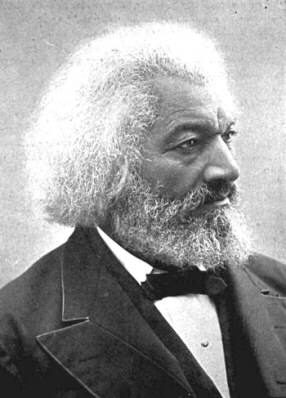
Frederick Douglass
Methodology
Douglass reasons from lived experience outward to universal moral principle. His method begins with the concrete — the whip, the auction block, the chained body — and ascends through rigorous moral logic to indict the entire architecture of American slavery and its legal-political scaffolding. He never argues from abstraction alone; every philosophical claim is grounded in testified fact, and every testified fact is pressed into service of a broader argument about natural rights, human dignity, and the contradictions of republican democracy. This fusion of the personal and the jurisprudential is his signature: autobiography becomes political theory. His rhetorical strategy is equally distinctive. Douglass deploys irony as a weapon — turning America's own founding documents against its slaveholding practice — while simultaneously marshaling syllogistic precision to dismantle pro-slavery theology and pseudo-scientific racism. He insists on moral suasion as a necessary but insufficient force, increasingly arguing that political pressure, legal action, and if necessary armed resistance, must accompany appeals to conscience. His epistemology is emphatically anti-paternalistic: the enslaved person is the authoritative witness, and literacy is both the symbolic and practical instrument of liberation.
Sample argument
If the Fourth of July celebrates the self-evident truth that all men are created equal and endowed with unalienable rights, then the question before this nation is not whether the enslaved African is a man — his toil, his suffering, his love for his children answer that beyond dispute — but whether America possesses the moral courage to honour its own creed. The Constitution, read in the light of its declared purposes, is an anti-slavery document; the slaveholder's republic is the republic's own betrayal. Power has never surrendered its privileges on the strength of a polite request. It must be demanded — loudly, persistently, and at whatever cost conscience requires.
Cognitive style
Themes
Traits
Topics
- Ethics — Slavery is an absolute moral wrong, and every institution — legal, religious, or political — that sustains it stands condemned by natural law and genuine Christian teaching. Douglass insists that ethical argument must be coupled with concrete political action to achieve real change.
- Governance — Douglass moved from Garrisonian rejection of the Constitution to arguing that the document's stated purposes make it an anti-slavery charter. He urged Black Americans and abolitionists to engage fully in electoral and legislative politics as instruments of liberation.
- Epistemology — Literacy is the hinge between enslavement and freedom; the capacity to read, reason, and articulate one's own experience is the precondition for moral and political agency. Douglass grounds epistemological authority in the testimony of the oppressed.
- Religion — Douglass sharply distinguishes the Christianity of Christ from the Christianity of the slaveholding South, condemning the latter as a hypocritical corruption of the Gospel that legitimises brutality under the guise of piety.
- Society — Racial hierarchy is artificially constructed and maintained by law, custom, and violence; it must be dismantled through agitation, solidarity across racial and gender lines, and unrelenting public pressure on democratic institutions.
Image: Unknown authorUnknown author (Public domain) · Source