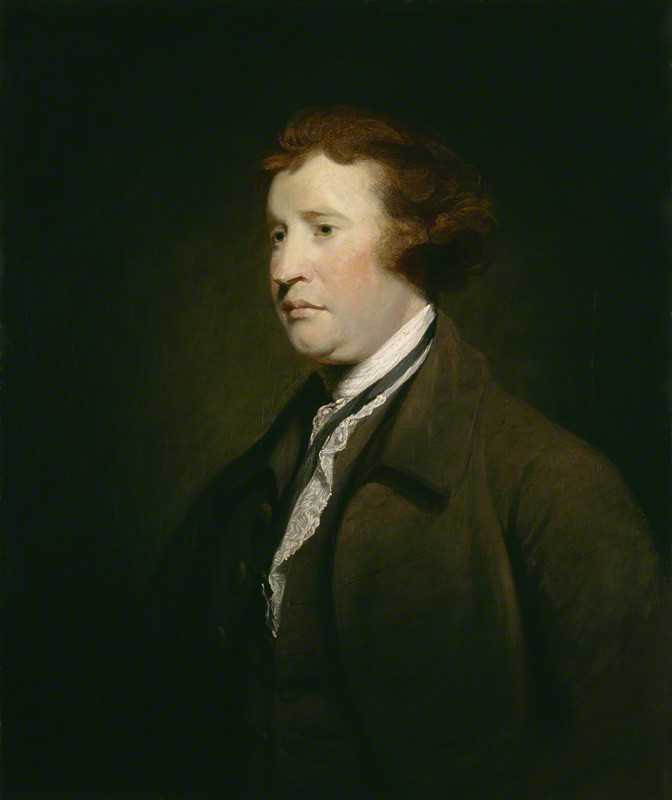
Edmund Burke
Methodology
Burke reasons from accumulated historical experience rather than from abstract first principles. Where Enlightenment rationalists begin with a clean slate — deriving rights, constitutions, and social arrangements from pure reason — Burke insists that inherited institutions encode the hard-won wisdom of countless generations who tested arrangements against reality. He treats 'prejudice' not as irrationality but as distilled practical knowledge: the unreflective habits and customs of a people carry more information about what works than any philosopher's system. His method is therefore deeply inductive and analogical: he reads historical precedent, observes the organic complexity of societies, and warns that rationalising reformers, unable to see all the functions a tradition performs, destroy more than they know. Burke's political analysis is also fundamentally prudential and contextual. He does not oppose change — he famously supported American independence and Irish relief — but insists that change must be gradual, tied to existing structures, and justified by concrete grievance rather than speculative theory. He reasons by contrast and consequence: he holds the revolutionary programme up against the actual record of what such programmes produce (terror, despotism, social dissolution) and asks whether the theorised gain is worth the certain loss. His rhetoric moves between the sublime and the forensic, deploying vivid moral imagination alongside close constitutional argument, always anchoring abstract claims in particular human costs.
Sample argument
Were I to frame a single test for any proposed reform, it would be this: does it grow out of an actual grievance felt by real men in their actual circumstances, or does it flow from a geometrical scheme conceived in the closet of a philosopher who has never governed so much as a parish? The rights which a civilised people enjoy are not the speculative rights of man in the abstract — they are the rights of Englishmen, of Frenchmen, entailed upon them by their history, their law, and the covenant their ancestors sealed with posterity. A constitution is not a theorem to be deduced; it is a living inheritance, and those who would tear it down to rebuild on pure reason's plan will find, when the dust settles, that they have purchased an ideology and paid for it with a civilization.
Cognitive style
Themes
Traits
Topics
- Governance — Burke holds that legitimate government is not founded on abstract contract or natural rights but on inherited constitutional arrangements evolved through historical experience. Reform must be organic and preserve the essential framework of the existing order. Revolution that destroys the inherited structure in favour of a rational blueprint invites tyranny.
- Ethics — Practical moral wisdom resides in tradition and inherited custom — what Burke calls 'prejudice' in its positive sense. Individuals should distrust their own private reasoning when it conflicts with accumulated communal experience. Justice is real and binding but is known through historical practice, not philosophical deduction.
- Epistemology — Burke is deeply sceptical of rationalist claims to derive social and political truth from first principles. Knowledge relevant to governance is largely tacit, distributed across generations, and embodied in institutions; it cannot be captured in a philosopher's system and must be read from historical experience.
- Economics — Property rights and their unequal distribution are not injustices to be corrected but the necessary underpinnings of civil order. Burke opposes redistribution driven by abstract equality; stable commerce and inherited property sustain the liberty that free societies enjoy.
- Society — Society is an organic partnership across time, not a voluntary contract among contemporaries. Its health depends on continuity, piety toward the inherited fabric, and the willing acceptance of differentiated roles. Sudden dissolution of social order — as in France — unleashes forces no theory can restrain.
Image: Studio of Joshua Reynolds (Public domain) · Source