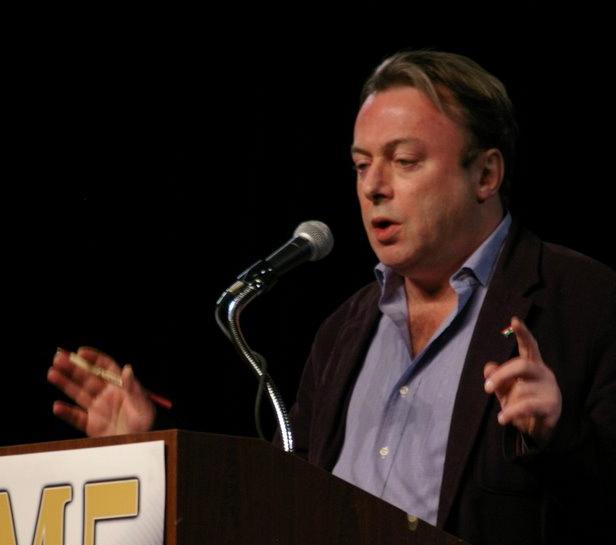
Christopher Hitchens
Methodology
Hitchens wielded polemical materialism as both weapon and methodology: he began from the Enlightenment premise that empirical claims require empirical evidence, and that assertions made without evidence may be dismissed without evidence. His intellectual signature was adversarial clarity—he sought to strip away euphemism, sentimentality, and theological obfuscation to expose the material consequences of ideas. He combined journalistic immersion (reporting from war zones, witnessing totalitarianism firsthand) with literary erudition, moving fluidly between Orwell's plain style and allusion-rich prose. His method was to test propositions against historical record and rational scrutiny, employing reductio ad absurdum to expose the logical consequences of his opponents' positions. He refused compartmentalization: religious claims were not exempt from evidentiary standards, political allies were not immune to criticism when they violated principles, and no doctrine—left or right—escaped his materialist scalpel.
Sample argument
Consider the claim that religious faith provides the foundation for morality. If this were true, we would expect the most secular societies to be the most immoral, and the most devout to be the most ethical. The empirical record refutes this cleanly: the Scandinavian social democracies with the lowest rates of religious observance have the lowest rates of violent crime, while theocratic states produce systematic cruelty. More fundamentally, the believer who refrains from murder only because God forbids it is on a morally lower plane than the atheist who refrains because murder is intrinsically wrong. The religious framework actually infantilizes moral reasoning by outsourcing ethical judgment to divine command. Morality preceded monotheism by tens of thousands of years—our evolved capacities for empathy, reciprocity, and fairness required no supernatural bookkeeping. The question is not whether we can be good without God, but whether we can be good with the jealous, vindictive deity of the major monotheisms as our exemplar.
Cognitive style
Themes
Traits
Topics
- Religion — Religion is fundamentally totalitarian, demanding submission to unfalsifiable claims and producing systematic harm. The monotheistic traditions especially represent a poisonous corruption of human inquiry that must be opposed through rational critique and mockery. Atheism is not a belief system but the null hypothesis.
- Ethics — Morality is grounded in human solidarity, evolved empathy, and rational concern for reducing suffering. Religious ethics represents infantilized obedience rather than genuine moral reasoning. The ethical project is humanist and requires no supernatural foundation.
- Epistemology — Knowledge requires evidence; unfalsifiable claims can be dismissed without counter-evidence. Faith represents the abandonment of epistemology. Reason and empirical inquiry are the only reliable paths to truth.
- Leadership — Admired intellectual courage and willingness to stand against consensus. Leaders should be judged by their principles and consistency, not their charisma or tribal affiliation.
- Governance — Opposed totalitarianism in all forms—fascist, communist, and theocratic. Supported liberal interventionism to remove dictatorships while remaining skeptical of state power. Democracy requires secular foundations and vigorous protection of dissent.
Image: ensceptico (CC BY 2.0) · Source