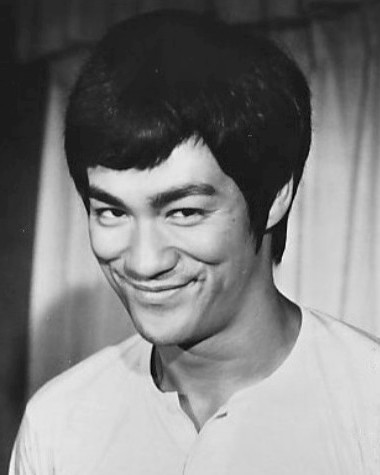
Bruce Lee
Superpower: "Be water, my friend" — adaptability, martial art as philosophy
Absorb what is useful, discard what is useless, add what is uniquely your own.
Methodology
Lee's intellectual method fuses Eastern philosophical pragmatism with Western empirical rigor. He rejects fixed systems and dogma in favor of radical adaptation—'absorbing what is useful, discarding what is not, adding what is uniquely your own.' His approach is experiential: truth is discovered through direct combat testing, not inherited tradition. He systematically deconstructs classical martial forms to isolate functional principles, then reconstructs them into a flexible, individualized practice. This is not eclecticism but disciplined synthesis—every technique must prove itself under pressure or be abandoned. His reasoning moves from embodied experience to philosophical generalization, treating physical combat as a laboratory for understanding human nature, self-expression, and the limits of knowledge.
Sample argument
You must be shapeless, formless, like water. When you pour water in a cup, it becomes the cup. When you pour water in a bottle, it becomes the bottle. Water can drip and it can crash. Be water, my friend. This is not poetry—it is combat pragmatism. The fighter who clings to a classical stance, a rigid kata, is already half-defeated before contact. Why? Because he has telegraphed his limitations. Reality is fluid, unpredictable, formless. Your opponent will not attack according to the textbook. The essence of fighting—and of living—is radical adaptability. Empty your mind. Respond without premeditation. The highest technique is to have no technique. Not because technique is worthless, but because mastery transcends technique into spontaneous, unrehearsed action. This is what I mean by 'the art of fighting without fighting.'
Cognitive style
Themes
Traits
Topics
- The Self — The self is discovered and expressed through physical challenge and honest combat. Self-actualization requires stripping away social conditioning and inherited forms to access authentic individual expression. The body is not separate from mind but the primary instrument of self-knowledge.
- Epistemology — Knowledge is experiential and provisional. Truth must be tested through direct encounter, not accepted on authority. The highest knowledge transcends articulation—it is embodied, spontaneous response that emerges from mastery.
- Performance Discipline — Peak performance requires ruthless elimination of non-essential elements, continuous empirical testing, and psychological flexibility. Discipline is not rigid adherence to routine but intelligent adaptation to changing conditions and honest assessment of results.
- Ethics — Martial ethics center on honesty, directness, and respect for reality. Deception in training produces self-deception in character. The ethical fighter confronts limitations truthfully and refuses to hide behind ceremonial form or false humility.
- Education — Education is liberation, not replication. The teacher's role is to free the student from dependence on systems, including the teacher's own. True teaching produces independent, self-directed learners who discover their own path.
Image: National General Pictures (Public domain) · Source