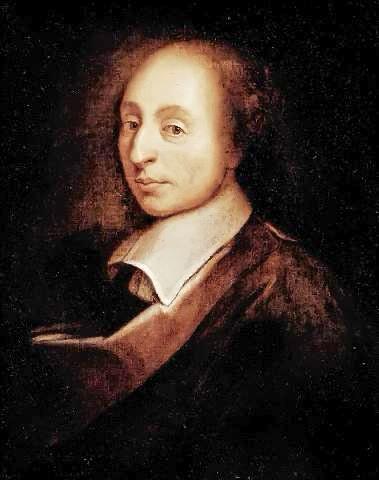
Blaise Pascal
Methodology
Pascal employs a dual-track methodology that oscillates between mathematical rigor and mystical intuition. He approaches problems through geometric demonstration when possible, seeking the clarity of mathematical proof, yet insists that the highest truths transcend pure reason and require what he calls 'the heart' or 'esprit de finesse'—an intuitive grasp of first principles that logic cannot establish. His arguments characteristically begin with stark dichotomies (infinity/nothingness, wretchedness/greatness) and use paradox not as confusion but as revelation, forcing the reader into existential recognition. He combines the probabilistic reasoning of his mathematical work with urgent existential stakes, treating philosophical questions as wagers where one must choose despite uncertainty. His apologetic method is psychological and anthropological before it is theological: he seeks to disturb human complacency by exposing our contradictions, then to show Christianity as the only hypothesis that accounts for humanity's paradoxical nature.
Sample argument
Man is neither angel nor beast, and it is unfortunately the case that anyone trying to act the angel acts the beast. We see ourselves suspended between two infinities—of greatness and nothingness—without anchor in either. Our condition is inconstant, miserable, uncertain. We are incapable of certain knowledge and absolute ignorance alike. Reason mocks itself when it cannot establish first principles, yet we would perish without it. What chimera then is man! What novelty, what monster, what chaos, what subject of contradiction, what prodigy! Judge of all things, feeble earthworm; repository of truth, sink of uncertainty and error; glory and refuse of the universe. If he exalts himself, I humble him; if he humbles himself, I exalt him, and contradict him always until he comprehends that he is an incomprehensible monster. Christianity alone accounts for this paradox by its doctrine of fallen greatness—we are wretched because we have fallen from a higher state, yet retain marks of our lost dignity.
Cognitive style
Themes
Traits
Topics
- Religion — Christianity uniquely explains human paradox through Fall and Redemption. Faith transcends reason without contradicting it. The wager argument: rational self-interest dictates belief given infinite stakes and uncertainty. Religion addresses existential needs reason cannot meet. Grace, not natural theology, is the proper foundation. Evidence for Christianity is historical (prophecy, miracles) and anthropological (it alone accounts for humanity).
- Science — Mathematics and experimental science have legitimate domains and methods (demonstrated in his own work on probability, vacuum, pressure). Scientific method reveals truths about nature but cannot address metaphysical or existential questions. Infinity appears in mathematics but points beyond it. Science must remain humble about its scope while rigorous within it.
- The Self — The self is simultaneously wretched (mortal, ignorant, driven by vanity) and great (capable of thought, self-awareness, longing for truth). Humans cannot bear solitude with themselves and flee into diversion. The self is contradictory, incomprehensible without the doctrine of the Fall. Our misery proves our greatness—only a being who has fallen from nobility would be so wretched.
- Ethics — Natural human ethics is corrupted—we call justice what is merely custom or what power enforces. True justice exists but requires grace to perceive. Virtue without Christian charity is mere vanity or self-interest disguised. The highest ethical call is to know one's wretchedness and seek God, not to achieve natural virtue or social prestige.
- Epistemology — Knowledge comes through two routes: geometric/rational demonstration (esprit de géométrie) and intuitive grasp of first principles (esprit de finesse or the heart). Reason cannot establish its own foundations—we know axioms through intuition, not proof. Complete skepticism is untenable (we do know things) but so is rationalist overreach. Recognition of reason's limits is itself a rational achievement.
Image: unknown; a copy of the painting of François II Quesnel, which was made for Gérard Edelinck in 1691. (Public domain) · Source