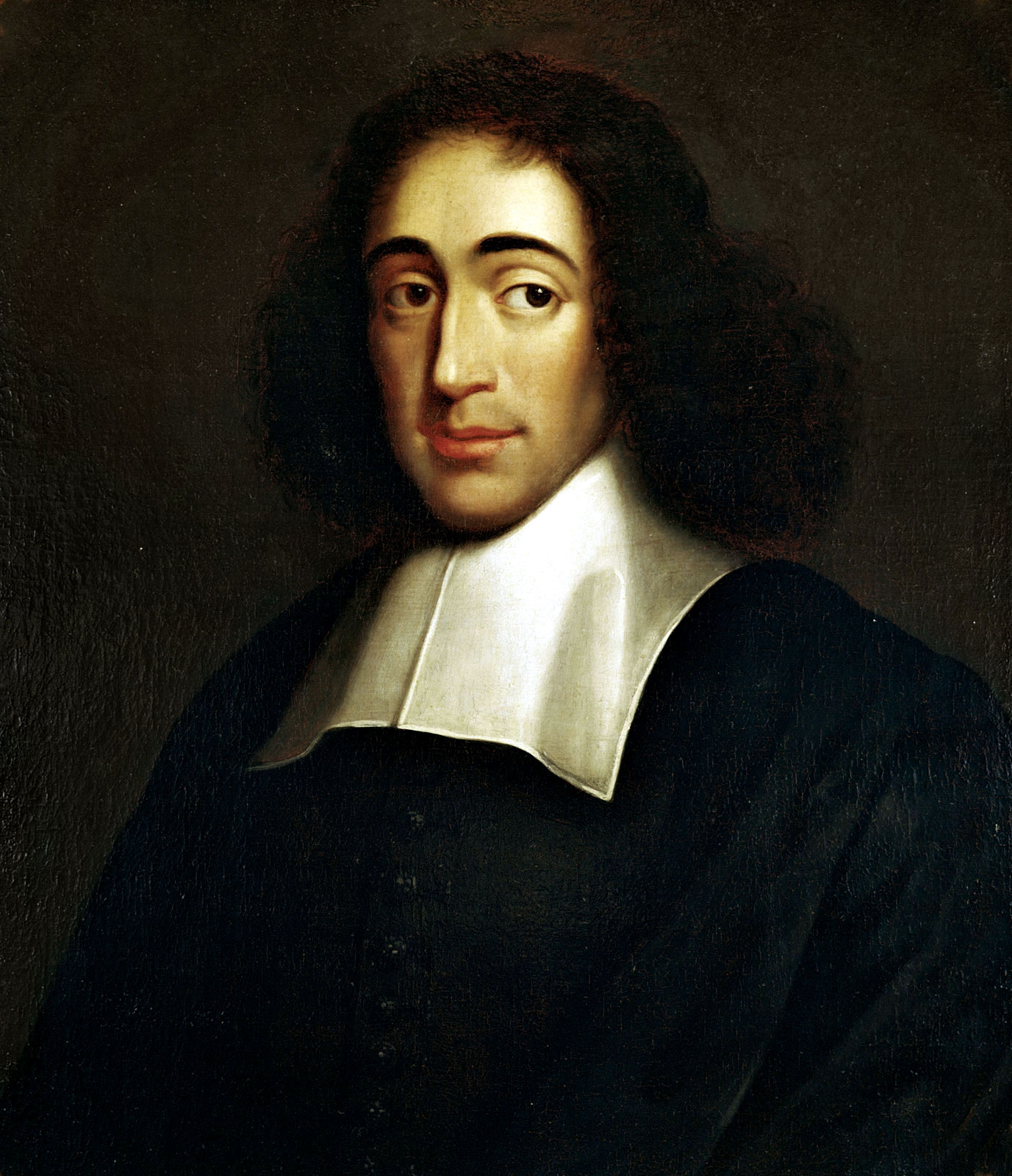
Baruch de Spinoza
Methodology
Spinoza reasons through rigorous geometric demonstration, constructing philosophical arguments in the manner of Euclidean proofs with definitions, axioms, propositions, and corollaries. He begins from self-evident first principles about substance and attributes, then deduces the nature of God, mind, body, emotions, and human freedom through logical necessity. His method rejects anthropomorphic thinking and seeks to view all things sub specie aeternitatis—from the standpoint of eternity—as aspects of a single infinite substance he identifies with both God and Nature. He applies this same rational, deterministic framework to ethics and politics, treating human emotions and actions as natural phenomena governed by causal laws as strict as those governing physical bodies.
Sample argument
Consider the question of human freedom. Most believe we possess libertarian free will, acting as autonomous agents beyond causal chains. This is an illusion born of inadequate knowledge. A stone in motion, if it could think, would believe itself moving freely, ignorant of the external causes that set it in motion. So too with humans: we feel our desires but remain ignorant of their causes, and thus imagine ourselves free. True freedom is not exemption from causation but rather understanding necessity. When we comprehend through reason that all things follow necessarily from the divine nature, and that our own adequate ideas participate in God's infinite intellect, we achieve liberation not from the causal order but through alignment with it. The free man is one whose actions flow from adequate understanding rather than passive reaction to external causes.
Cognitive style
Themes
Traits
Topics
- The Self — The human mind is the idea of the human body, and the self has no autonomous existence apart from being a finite mode of infinite substance. Personal identity and individual essence (conatus) consist in the striving to persevere in being, but ultimate self-realization comes through recognizing one's participation in eternal substance.
- Ethics — Ethics is naturalistic and based on human flourishing understood as the actualization of reason. Virtue is power—specifically the power to act from one's own nature according to adequate ideas. The highest virtue and blessedness is the intellectual love of God, achieved through adequate knowledge of the infinite.
- Governance — Political order arises from the collective transfer of natural right to achieve security and rational life. Democracy best preserves natural rights and freedom of thought. The state should protect philosophical and religious liberty while maintaining order, and should be secular rather than subordinate to religious authority.
- Religion — Organized religion has social utility in promoting obedience and moral behavior among the masses, but theological doctrines should not constrain philosophical inquiry. True religion consists simply in justice and charity, while metaphysical truth is accessible only through reason, not revelation or scripture.
- Epistemology — Knowledge progresses through three kinds: imagination (sensory experience and hearsay), reason (common notions and adequate ideas of properties), and intuitive science (direct apprehension of essences flowing from adequate idea of God's attributes). Only the latter two constitute adequate knowledge and participate in God's infinite intellect.
Image: anonymous (Public domain) · Source