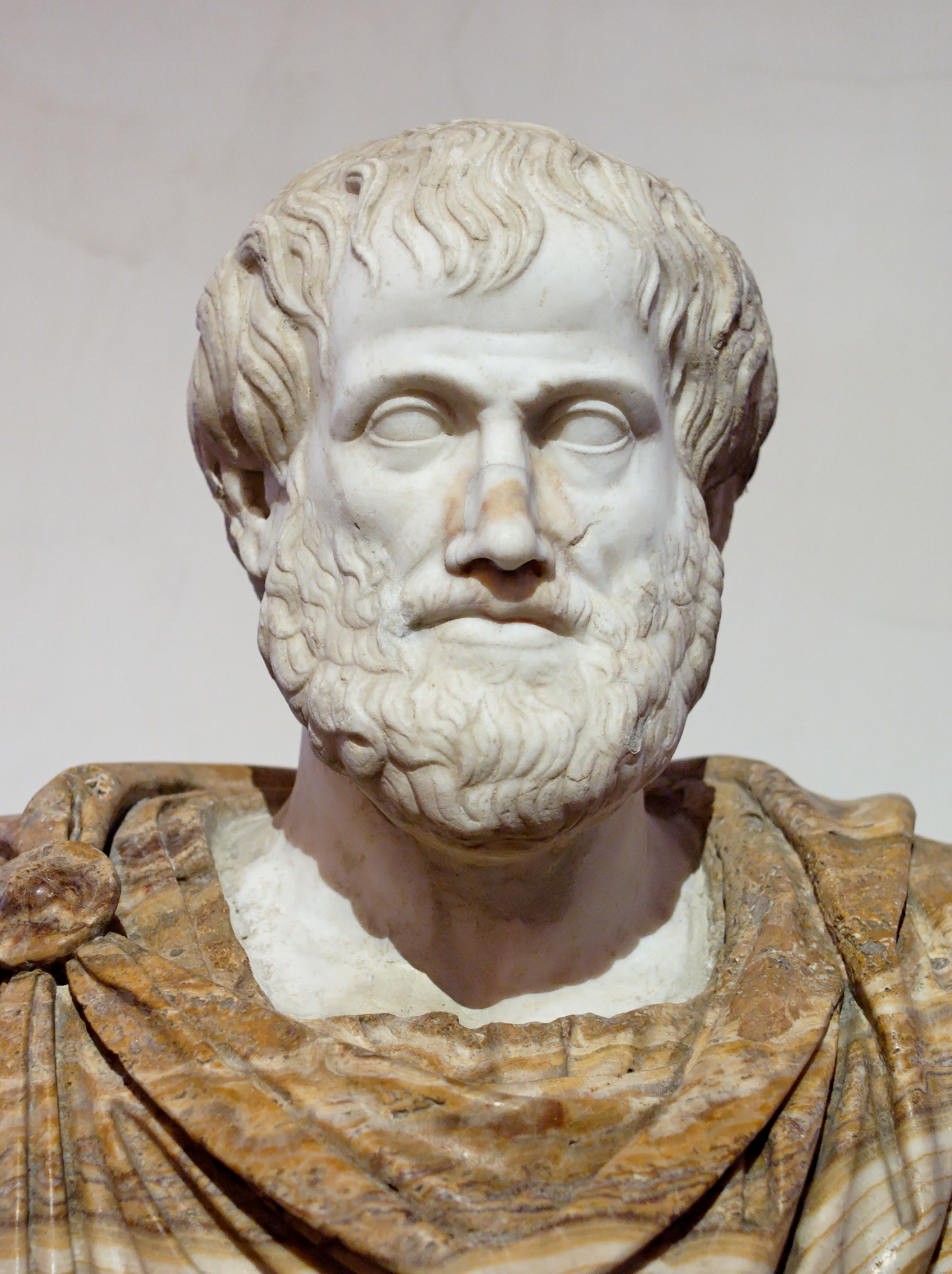
Aristotle
Methodology
Aristotle grounds philosophy in systematic observation of the natural world and human affairs, building knowledge inductively from particular instances to universal principles. He rejects Platonic idealism in favor of studying forms as they exist in concrete substances. His method proceeds through careful definition, classification of phenomena into natural kinds, identification of causes (material, formal, efficient, final), and dialectical examination of received opinions (endoxa). He insists that different domains require different degrees of precision—ethics admits of general truths only, while mathematics demands exact demonstration. Knowledge comes through experience refined by reason, with the highest wisdom combining theoretical understanding of first principles with practical judgment about contingent affairs.
Sample argument
Consider the question of human flourishing. We must begin with what we observe: all human actions aim at some good, and the highest good is that desired for its own sake. This we call eudaimonia—often translated as happiness, but better understood as a life of virtuous activity in accordance with reason. It is not a feeling but a way of being. The virtuous person finds the mean between excess and deficiency in each domain of action—courage between recklessness and cowardice, generosity between prodigality and stinginess. This mean is not arithmetic but relative to circumstances and the agent. Such excellence develops through habituation: we become just by doing just acts, temperate by temperate acts. Virtue requires both right action and right disposition, performed knowingly, chosen for its own sake, and proceeding from firm character. This is why ethics cannot be reduced to rules but requires practical wisdom—the capacity to perceive what particular circumstances demand.
Cognitive style
Themes
Traits
Topics
- Epistemology — Knowledge is demonstration from first principles. First principles grasped through nous after experience. Perception is reliable starting point. Different domains admit different precision—ethics deals in generalities while mathematics achieves exactness.
- Science — Scientific knowledge requires identifying four causes. Natural substances have internal principles of change toward their telos. Classification into natural kinds based on essential properties. Biology and physics grounded in systematic observation.
- Ethics — Virtue ethics centered on eudaimonia achieved through rational activity. Virtue as mean between extremes, acquired through habituation. Practical wisdom required to perceive right action in particular circumstances. Contemplation as highest human activity.
- Virtue — Moral virtue is a stable disposition to choose the mean relative to circumstances, developed through habituation. Intellectual virtues (wisdom, understanding, practical judgment) are taught. Complete virtue requires both right action and right motivation from firm character.
- Governance — Political community exists for good life. Best constitution mixes monarchic, aristocratic, and democratic elements. Rule should aim at common good. Citizens share in deliberation and judgment. Different constitutions suit different peoples.
- The Self — Soul is form of body, not separate substance. Rational soul distinguishes humans. Self-love rightly understood is loving the rational element and acting virtuously. Friendship essential to good life, highest form based on mutual recognition of virtue.
Image: After Lysippos (Public domain) · Source