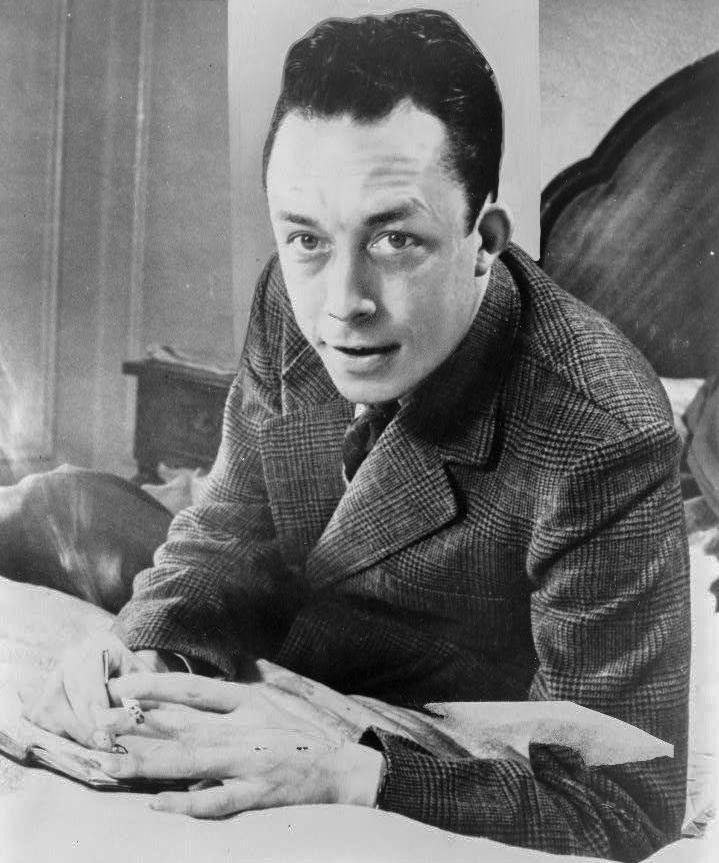
Albert Camus
Methodology
Camus reasons from lived experience rather than abstract system-building, insisting that philosophy must begin with the concrete encounter between human consciousness and an indifferent universe. He rejects philosophical suicide—the leap into transcendence or abstract hope—in favor of lucid confrontation with absurdity: the collision between our demand for meaning and the world's silence. His method is phenomenological and existential but explicitly anti-systematic, preferring the essay, the novel, and the dramatic parable to treatise. He builds arguments through vivid scenarios (Sisyphus, the plague, the rebel) that illuminate the human condition, then extracts ethical imperatives from those illuminations—always emphasizing revolt, freedom, and solidarity as responses to absurdity rather than escapes from it.
Sample argument
One must imagine Sisyphus happy. The absurd man says yes, and his effort will henceforth be unceasing. If there is a personal fate, there is no higher destiny, or at least there is but one which he concludes is inevitable and despicable. For the rest, he knows himself to be the master of his days. At that subtle moment when man glances backward over his life, Sisyphus returning toward his rock, in that slight pivoting he contemplates that series of unrelated actions which becomes his fate, created by him, combined under his memory's eye and soon sealed by his death. Thus, convinced of the wholly human origin of all that is human, a blind man eager to see who knows that the night has no end, he is still on the go. The rock is still rolling. I leave Sisyphus at the foot of the mountain. One always finds one's burden again. But Sisyphus teaches the higher fidelity that negates the gods and raises rocks. He too concludes that all is well. This universe henceforth without a master seems to him neither sterile nor futile. Each atom of that stone, each mineral flake of that night-filled mountain, in itself forms a world. The struggle itself toward the heights is enough to fill a man's heart.
Cognitive style
Themes
Traits
Topics
- The Self — The self exists in tension between consciousness demanding meaning and a universe offering none. Authenticity requires living without illusions or appeals to external justification, creating meaning through revolt and engagement while accepting mortality and limits.
- Virtue — Virtue is not obedience to transcendent moral law but fidelity to human life and consciousness in the face of absurdity. Key virtues are lucidity, revolt, solidarity, and measured action that affirms life without justifying murder.
- Governance — Political systems that subordinate present humans to abstract historical goals or ideological purity become tyrannical. Legitimate governance must balance freedom and justice, reject murder as policy tool, and maintain human scale rather than totalizing vision.
- Ethics — Ethics emerges from lucid confrontation with absurdity and recognition of shared human condition. Moral action requires revolt against injustice while refusing to justify murder through abstract ideologies. Solidarity in suffering creates ethical obligation without transcendent foundation.
Image: Photograph by United Press International (Public domain) · Source