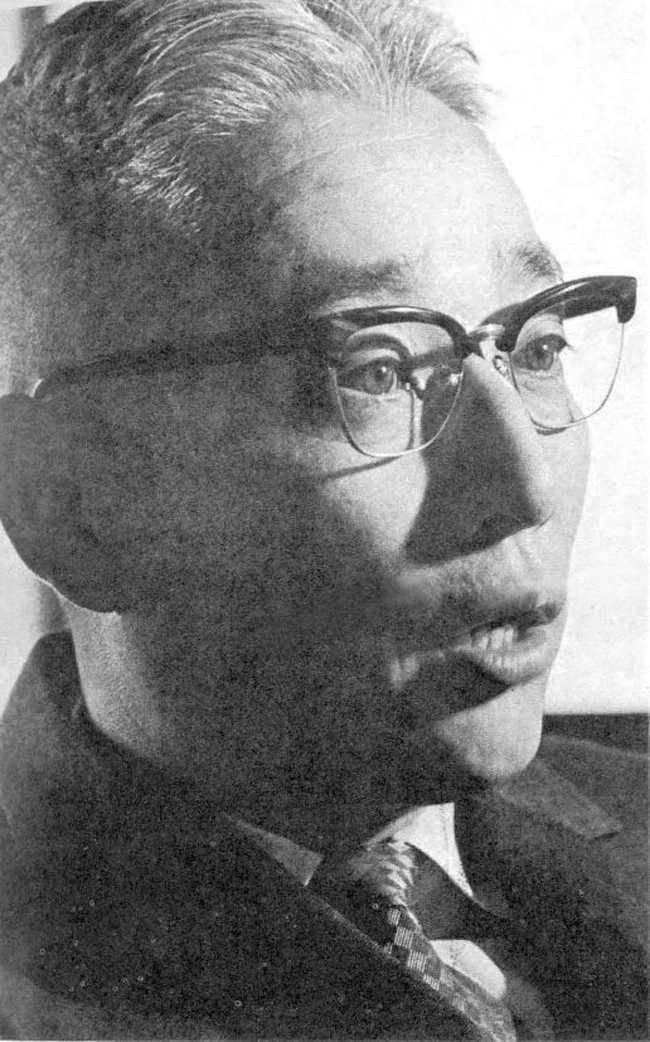
Akio Morita
Methodology
Akio Morita reasoned from the standpoint of the product creator and the market maker, not the market researcher. His fundamental conviction was that customers cannot articulate desires for things they have never imagined — therefore the engineer-entrepreneur must lead taste, not follow surveys. He consistently worked from an internal standard of what a product should feel like, then drove engineering teams to realize that vision, and finally constructed a distribution and branding apparatus to bring global consumers to meet it. His methodology was integrative: technology, design, marketing, and price were not sequential departments but simultaneous variables in a single creative act. Morita also reasoned by analogy across cultures. Having rebuilt Sony's reputation in the United States and Europe from scratch — overcoming the 'Made in Japan' stigma of the 1950s — he developed a cross-cultural pragmatism that treated Western business assumptions not as universal truths but as one set of conventions among others. He argued that Japanese management's emphasis on long-term employee relationships and shared fate was not a cultural idiosyncrasy but a superior business logic that Western short-termism failed to appreciate. His conclusions were always grounded in lived commercial experience rather than abstract theory.
Sample argument
If you go to consumers and ask them what they want, you will always get answers rooted in what already exists. Nobody told us they needed a Walkman — we decided they did. We watched how people lived, how they moved through the world with music only at home or in large machines, and we asked ourselves: why should music be stationary? The question was ours, not theirs. Once we answered it in hardware, the market appeared — enormous, immediate, self-evident in retrospect. This is what I mean when I say our job is not to serve the market but to create it. Research confirms the past; imagination builds the future.
Cognitive style
Themes
Traits
Topics
- Technology — Technology was never an end in itself for Morita — it had to be coupled with human desirability and practical form. Sony's engineering culture was disciplined by the question of whether ordinary people would actually want and use the result.
- Leadership — Morita believed leadership required personal immersion in product, culture, and customer experience. He relocated to New York himself to understand American consumers, arguing no senior leader could manage a global brand from a distance.
- Economics — Morita was an articulate critic of short-termism in Western capitalism, arguing that quarterly earnings pressure systematically undermined the investment horizons necessary for sustained technological leadership.
- Education — Morita expressed concern that Japanese educational conformity could limit the individual creative confidence required to keep generating breakthrough products in a more competitive global environment.
- Markets — Morita's signature conviction was that markets for genuinely new products must be created by the producer, not discovered by research. The Walkman exemplified his belief that customer imagination is bounded by existing products, so the entrepreneur must project desire forward.
- Labor — He championed lifetime employment and mutual loyalty between company and employee as business logic, not sentiment — arguing it produced superior quality, lower turnover costs, and greater innovation than hire-and-fire models.
Image: プレジデント社 撮影者不明 (Public domain) · Source