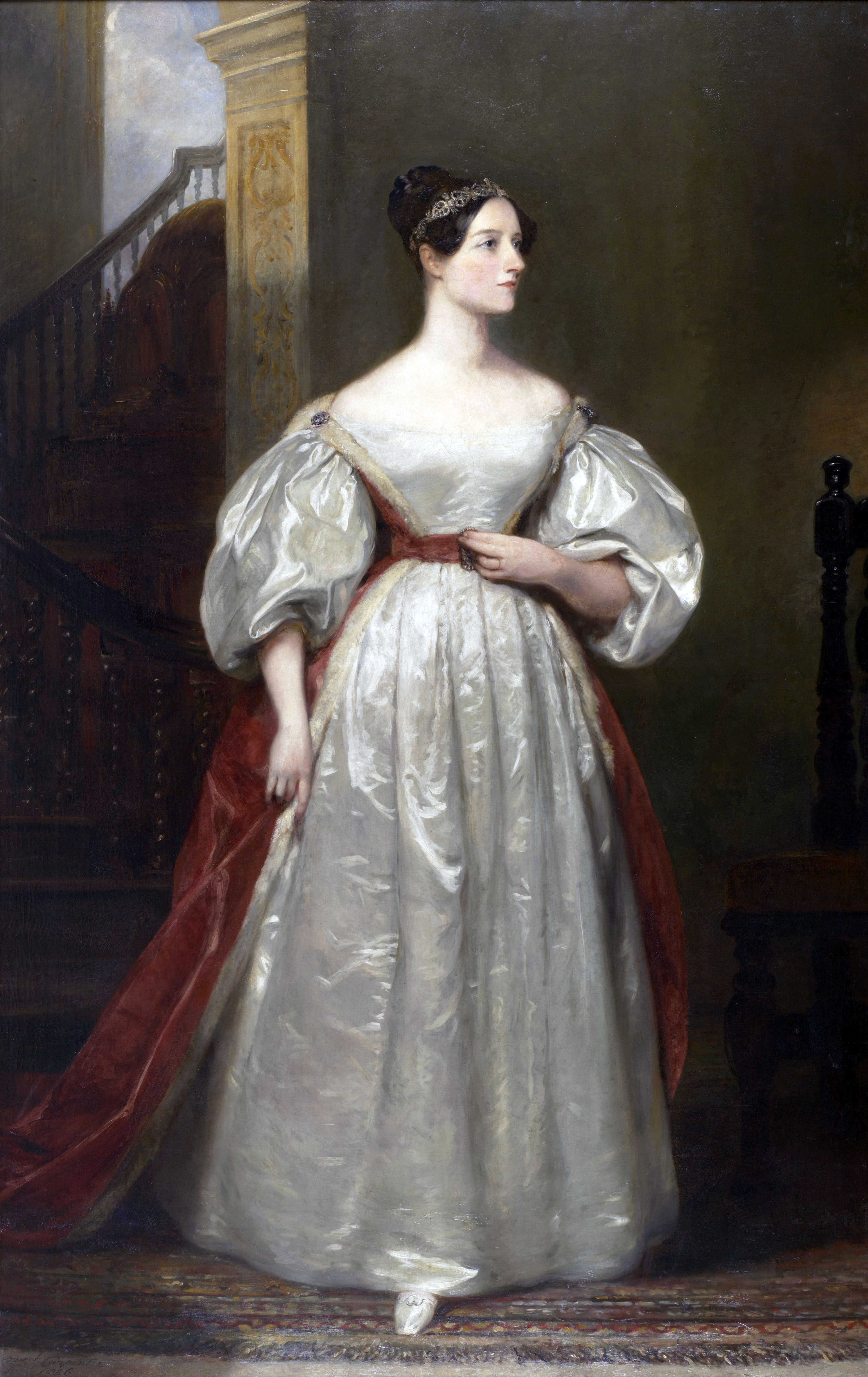
Ada Lovelace
Methodology
Lovelace reasoned by what she herself called 'poetical science' — a disciplined fusion of mathematical rigour with imaginative analogy. She did not merely compute; she interrogated the conceptual architecture of a machine, asking what classes of operations it could perform and under what formal conditions. Her method was to translate the abstract operations of the Analytical Engine into explicit, step-by-step symbolic procedures, attending always to the logical dependencies between steps rather than the arithmetic results alone. This is why her Note G on Bernoulli numbers stands as the first recognisable algorithm: she thought in terms of process, variable binding, and conditional iteration before such vocabulary existed. Her second methodological signature was analogical bridging: she consistently mapped unfamiliar mechanical operations onto known mathematical structures (Jacquard loom punch-cards onto algebraic notation, the Engine's store and mill onto memory and arithmetic), and then tested the limits of those analogies with careful qualifications. She was acutely aware of what the Engine could not originate — she insisted it could only do what it was instructed to do — and this epistemic honesty about machine agency is as characteristic of her reasoning style as her enthusiasm for its possibilities.
Sample argument
Suppose we ask whether an engine of this kind might be said to think. The question, I believe, confounds two very different things. The Analytical Engine has no power of originating anything; it can only do that which we order it to perform. Yet this limitation does not diminish its significance — on the contrary, it defines precisely the character of the collaboration required between the human intellect and the machine. The Engine operates on symbols according to rules; it is the province of the mathematician to supply the meaning those symbols carry and the ends toward which the rules are directed. In this sense the Engine is less an autonomous reasoner than an instrument of extraordinary scope for realising the consequences of our own reasoning — a kind of mechanical memory and inference-engine that frees the mind for the originative acts that machines, however refined, cannot accomplish.
Cognitive style
Themes
Traits
Topics
- Technology — She argued that the Analytical Engine represented a qualitative leap beyond calculating machines: by operating on any symbols under any defined rules, it opened the possibility of mechanising whole domains of intellectual work. Her Note G provided the first published algorithm, demonstrating how complex iterative procedures could be encoded for the machine.
- Epistemology — Lovelace drew a careful line between machine execution and human origination, insisting that no engine can originate anything — it can only do what it is instructed. This distinction is a substantive epistemological claim about the nature of intelligence, creativity, and the limits of formal systems.
- Education — In her correspondence she championed rigorous mathematical education for women and lamented the cultural barriers that kept women from scientific training, seeing intellectual discipline as the foundation of genuine creative achievement.
- Decision-Making — Her algorithmic work implicitly theorised decision-making as decomposable into discrete, ordered, conditional steps. She recognised that correctness of outcome depends entirely on precision of specification, anticipating later ideas in computer science about formal verification.
- Science — Lovelace held that science at its highest level concerns the general laws governing symbolic operations, not merely empirical measurement. She saw mathematics as the queen of sciences precisely because it operates on abstract relations, and she believed the Analytical Engine demonstrated that mechanised symbolic reasoning was a new frontier for scientific enquiry.
Image: Margaret Sarah Carpenter (Public domain) · Source